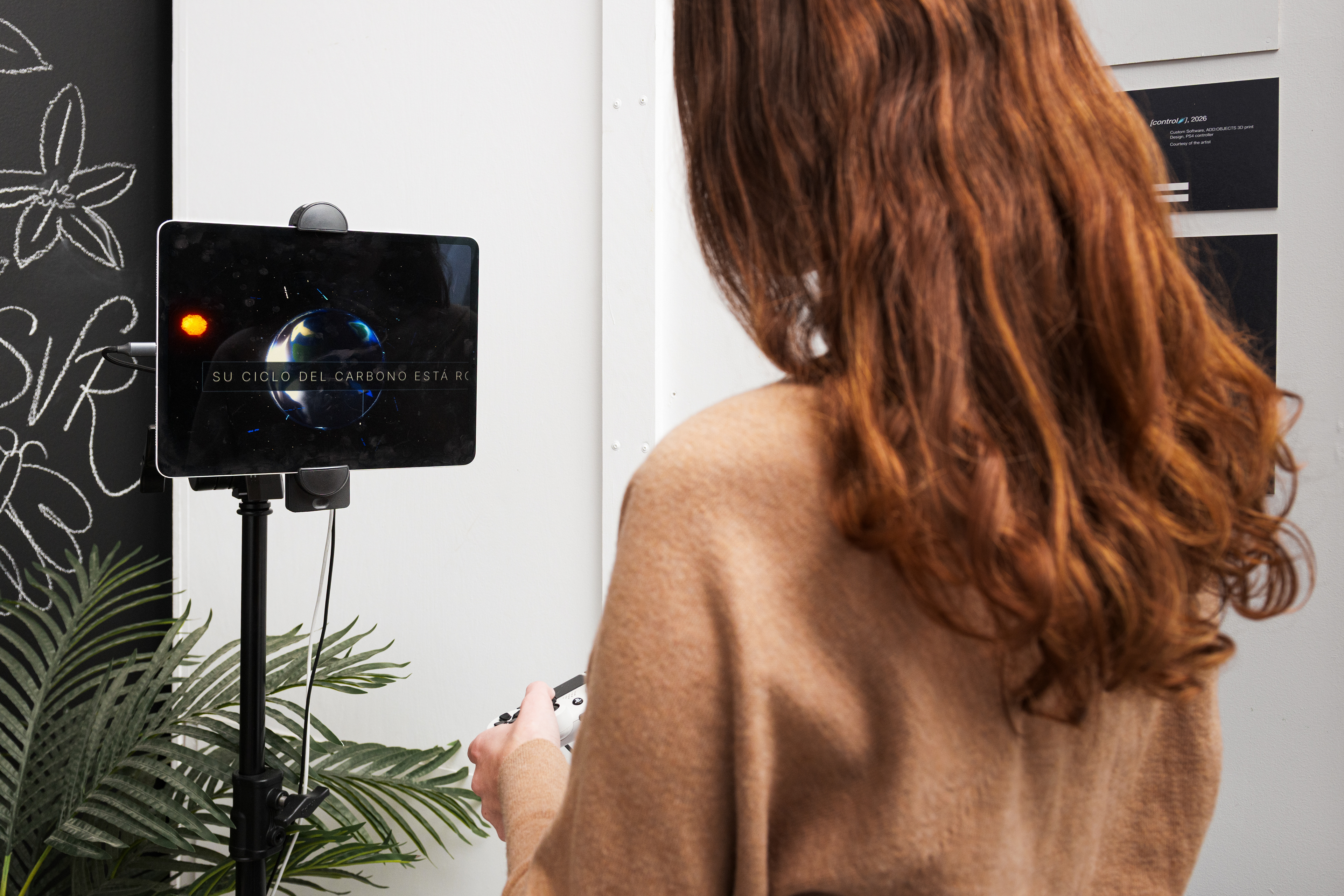
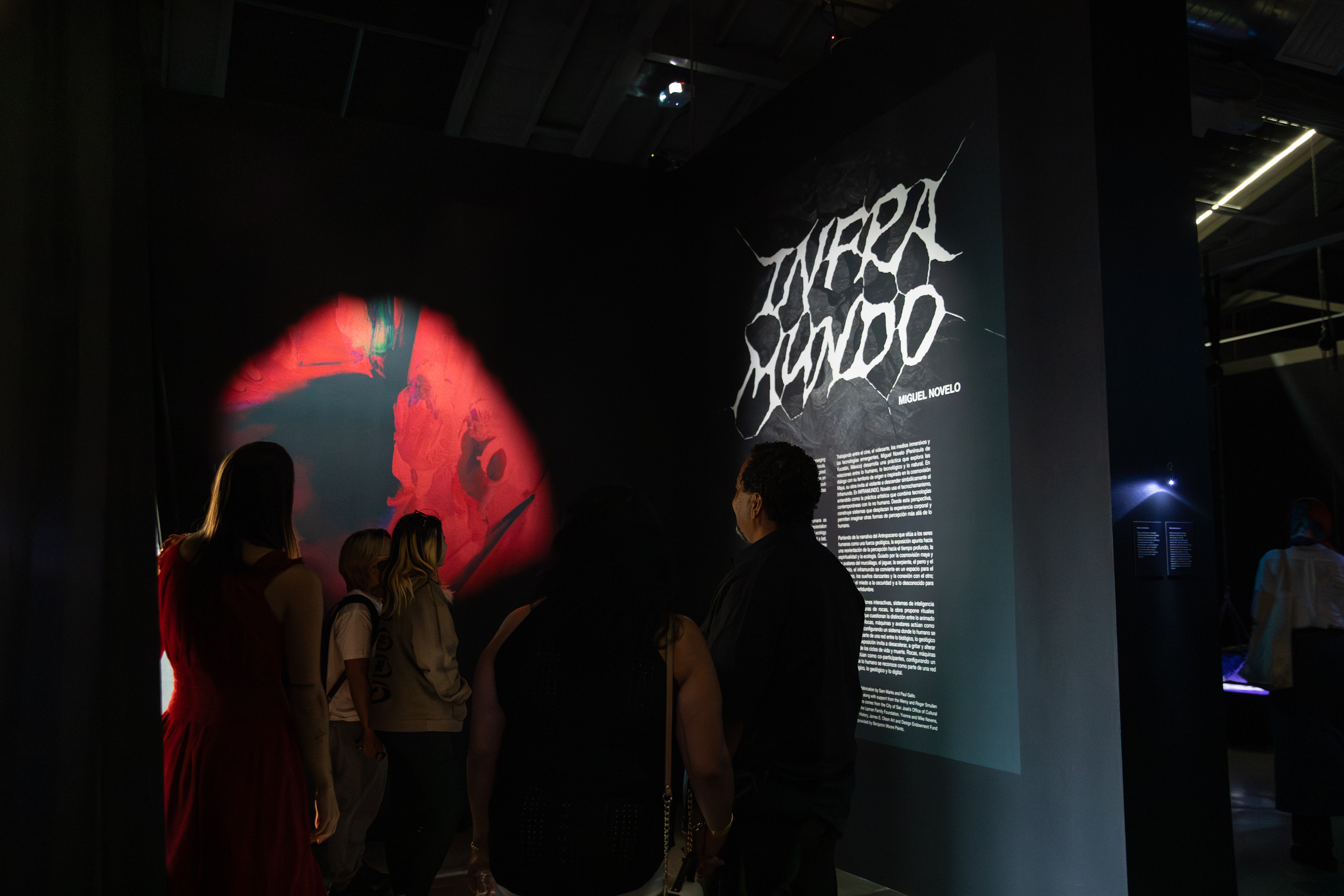
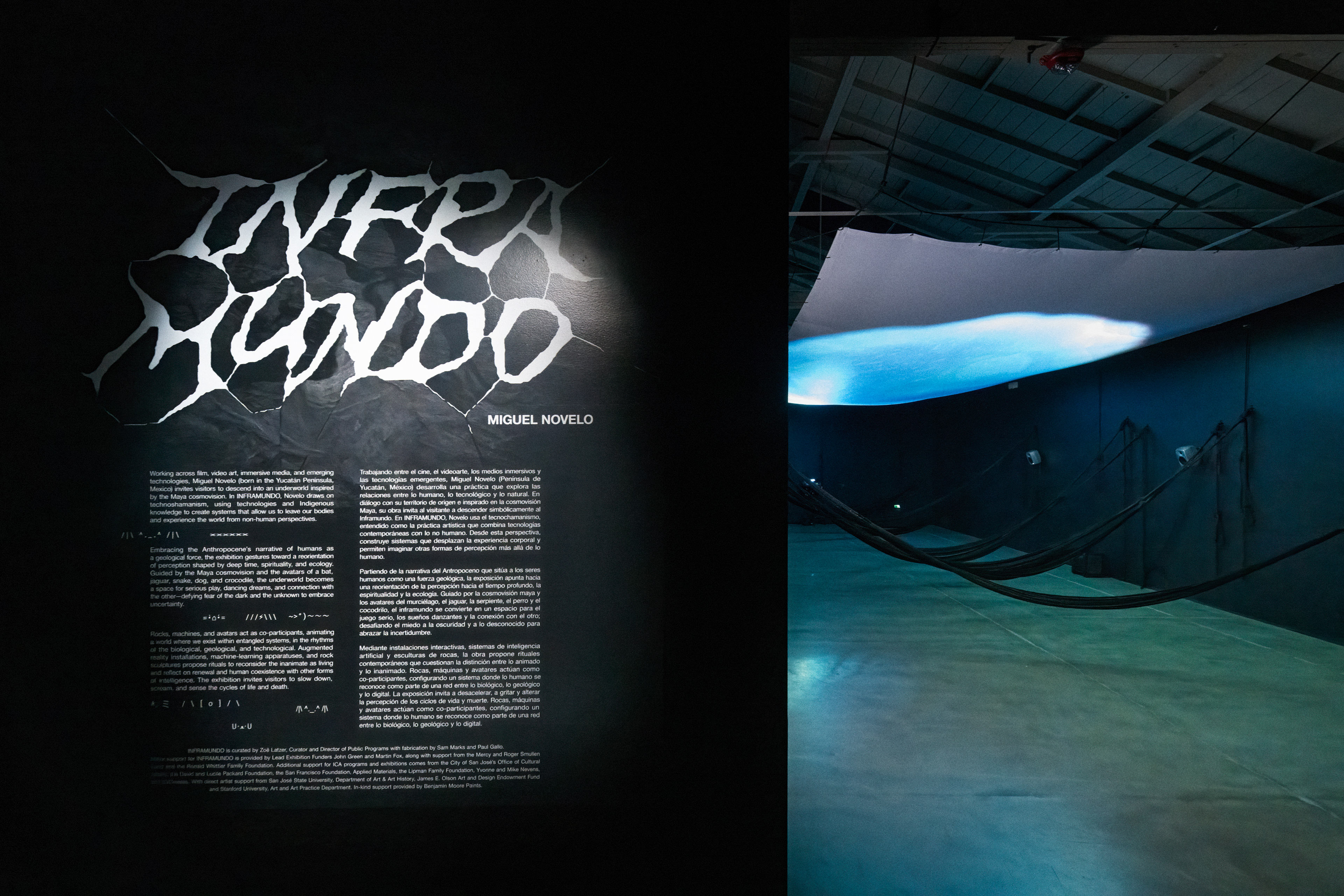
INFRAMUNDO
ICA San José, april 18 – august 23, 2026
curated by Zoë Latzer
A descent into the Maya underworld: where the bodily, the geological, and the digital stop being separate things. built over six years across the Yucatán Peninsula and Silicon Valley, INFRAMUNDO is an immersive environment of moving image, AI systems, rock sculptures, handwoven hammocks, augmented reality, and bodies that teach stones how to move. inspired by Maya cosmovision and technoshamanism, using human technology and non-human knowledge to build systems that displace ordinary experience and open other ways of sensing the world.
rocks, machines, and avatars as co-participants. visitors are invited to slow down, scream, and feel the cycles of life and death.
/ \ [ o ] / \ *☄︎ミ
[sueños del inframundo]
2026
ceiling-screen video installation, multi-channel projection, sound, procedural animation, hammocks
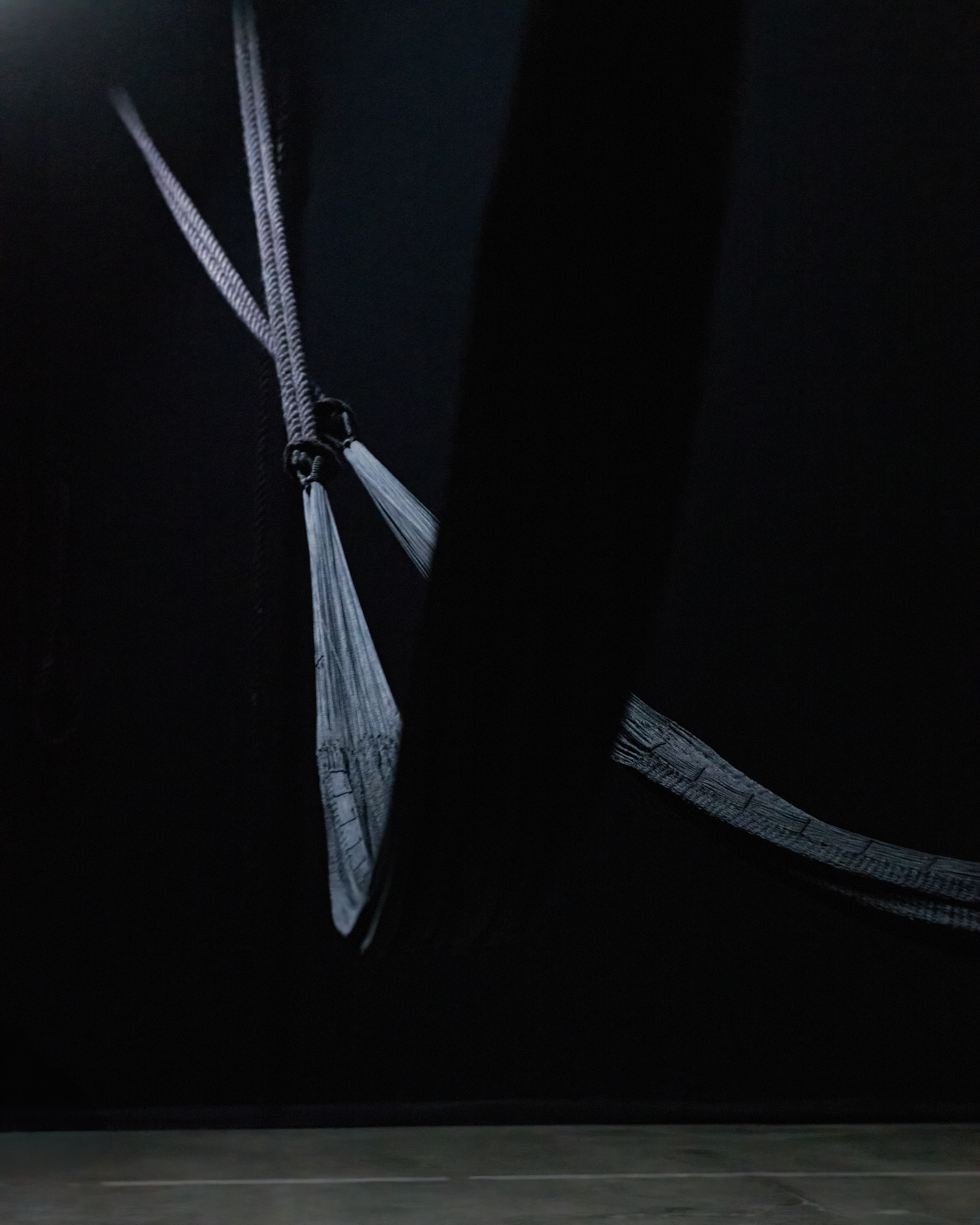
procedurally generated subterranean tunnels, never repeating, opening to thunderstorms, underground rivers, and cenotes: entrances to the Maya underworld. the sound is built to be felt through the body. eight handwoven hammocks, made by Edwin Carrillo and collaborators during incarceration, suspend visitors inside it. in the Yucatán, time moves slowly even in storms. the hammocks carry that.
In this region, water sinks into porous limestone, forming cenotes—clear blue sinkholes that act as natural passageways into underground river systems. For the Yucatec Maya, these were understood as portals to the underworld.
[𝘴𝘶𝘦ñ𝘰𝘴 𝘥𝘦𝘭 𝘪𝘯𝘧𝘳𝘢𝘮𝘶𝘯𝘥𝘰] (dreams of the underworld) is a procedural animation, resembling the river systems and cenotes projected overhead where cave systems and subterranean waters continuously shift, never repeating Visitors lie in hammocks beneath the work, immersed in sound, deep thrumming vibrations, water, and thunder entering a space where the body can dissolve, both weightless and carried.
[𝘴𝘶𝘦ñ𝘰𝘴 𝘥𝘦𝘭 𝘪𝘯𝘧𝘳𝘢𝘮𝘶𝘯𝘥𝘰] (dreams of the underworld) is a procedural animation, resembling the river systems and cenotes projected overhead where cave systems and subterranean waters continuously shift, never repeating Visitors lie in hammocks beneath the work, immersed in sound, deep thrumming vibrations, water, and thunder entering a space where the body can dissolve, both weightless and carried.
/|\ ^._.^ /|\ ⫘⫘⫘⫘⫘⫘
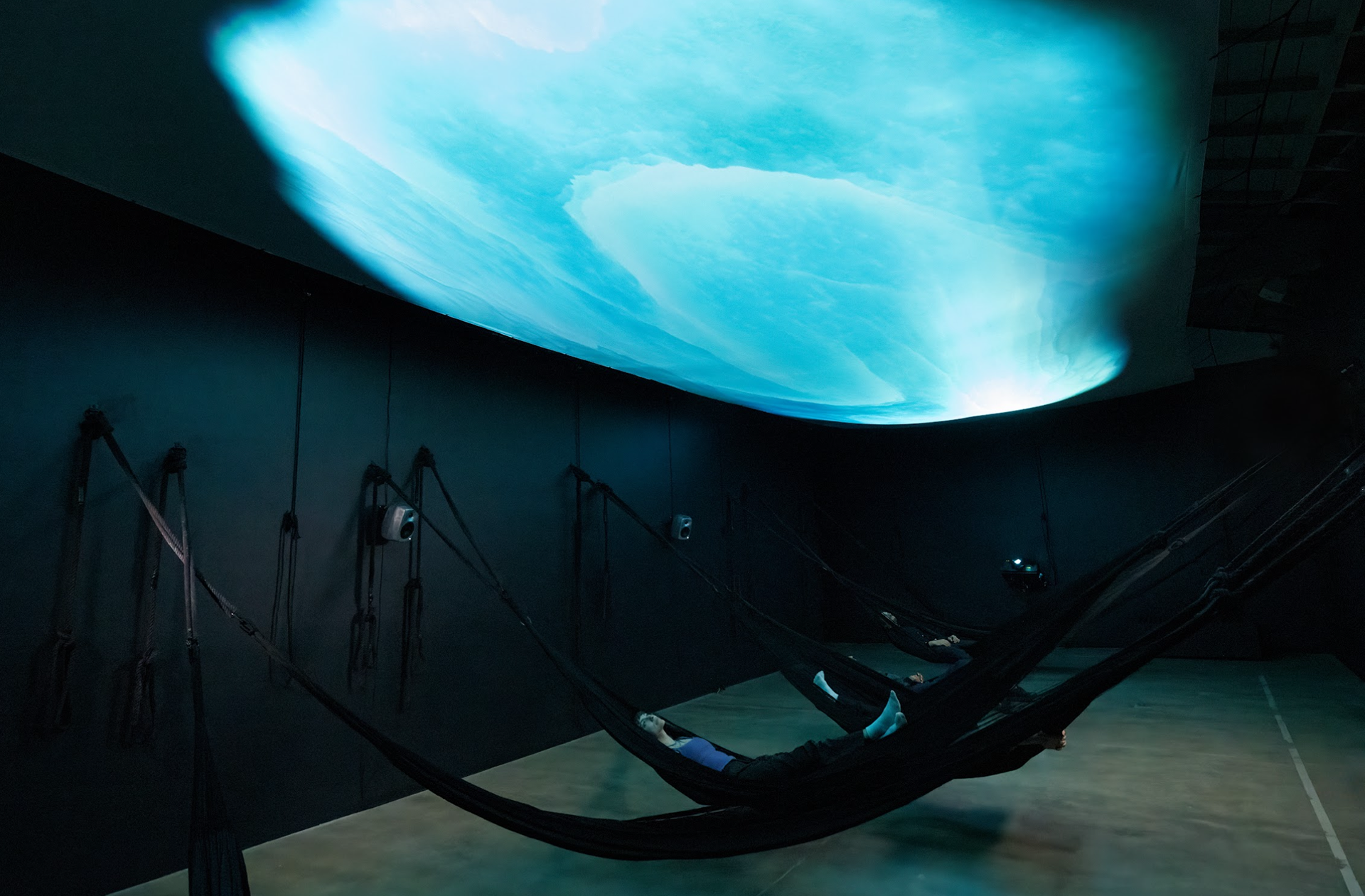
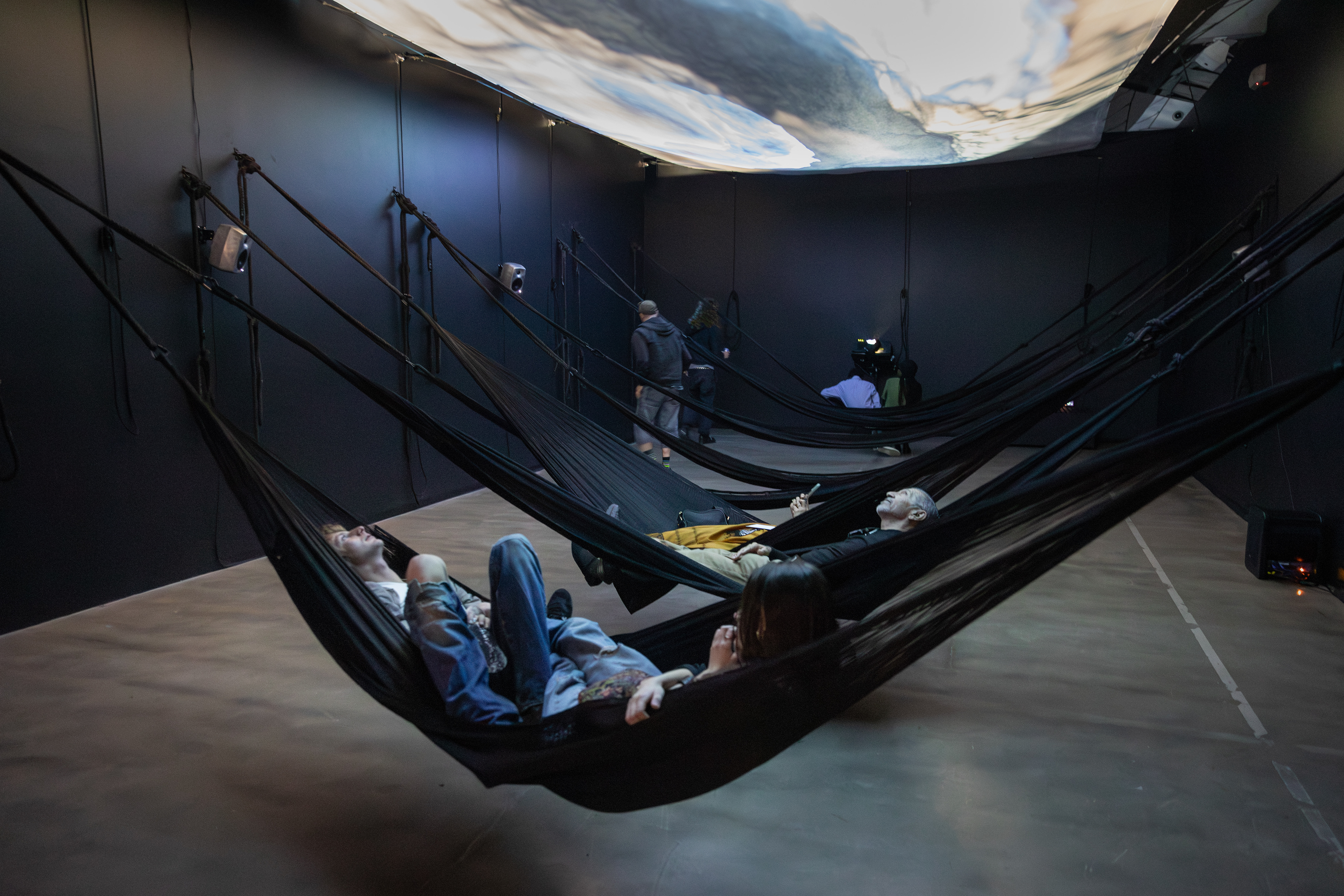
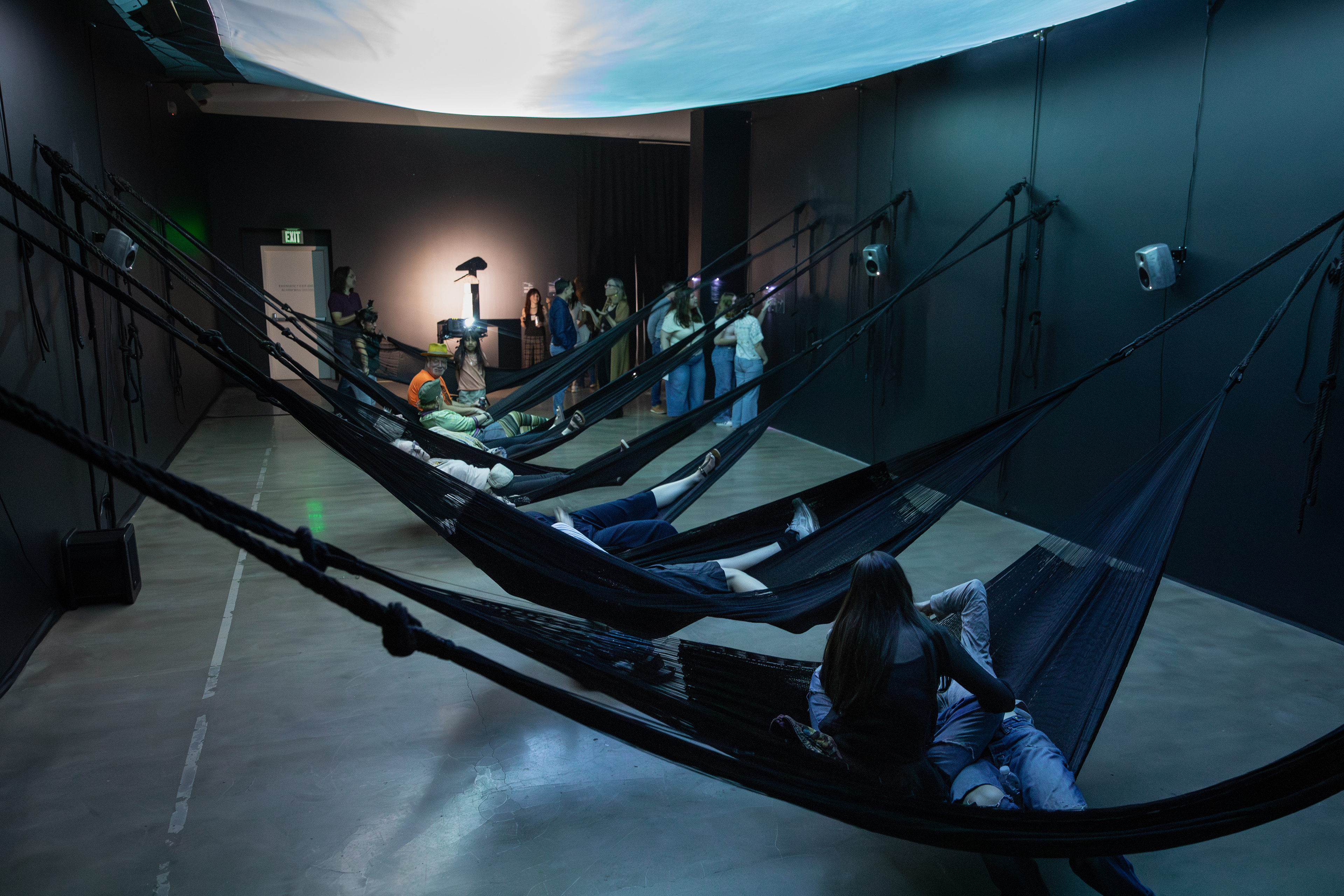
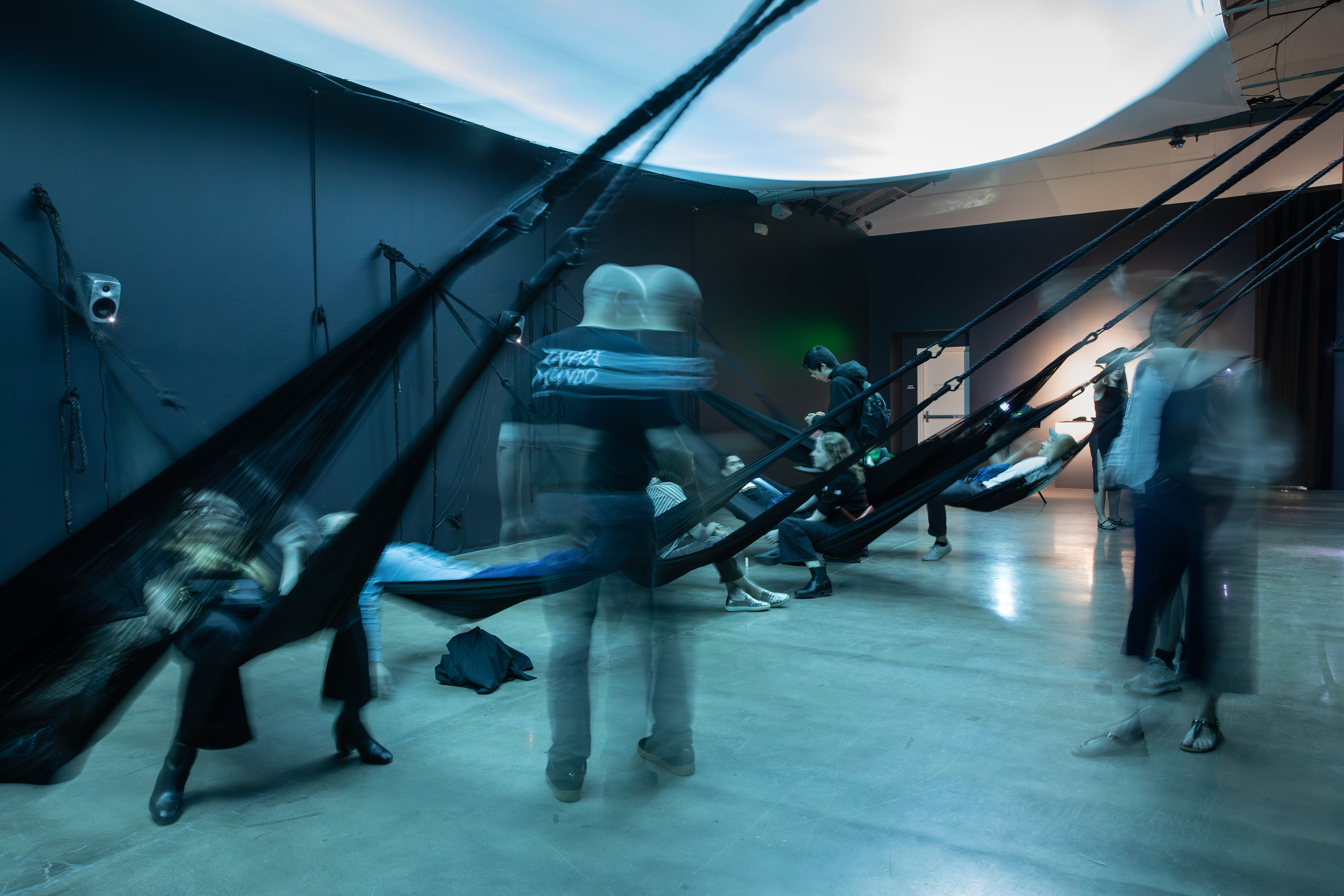
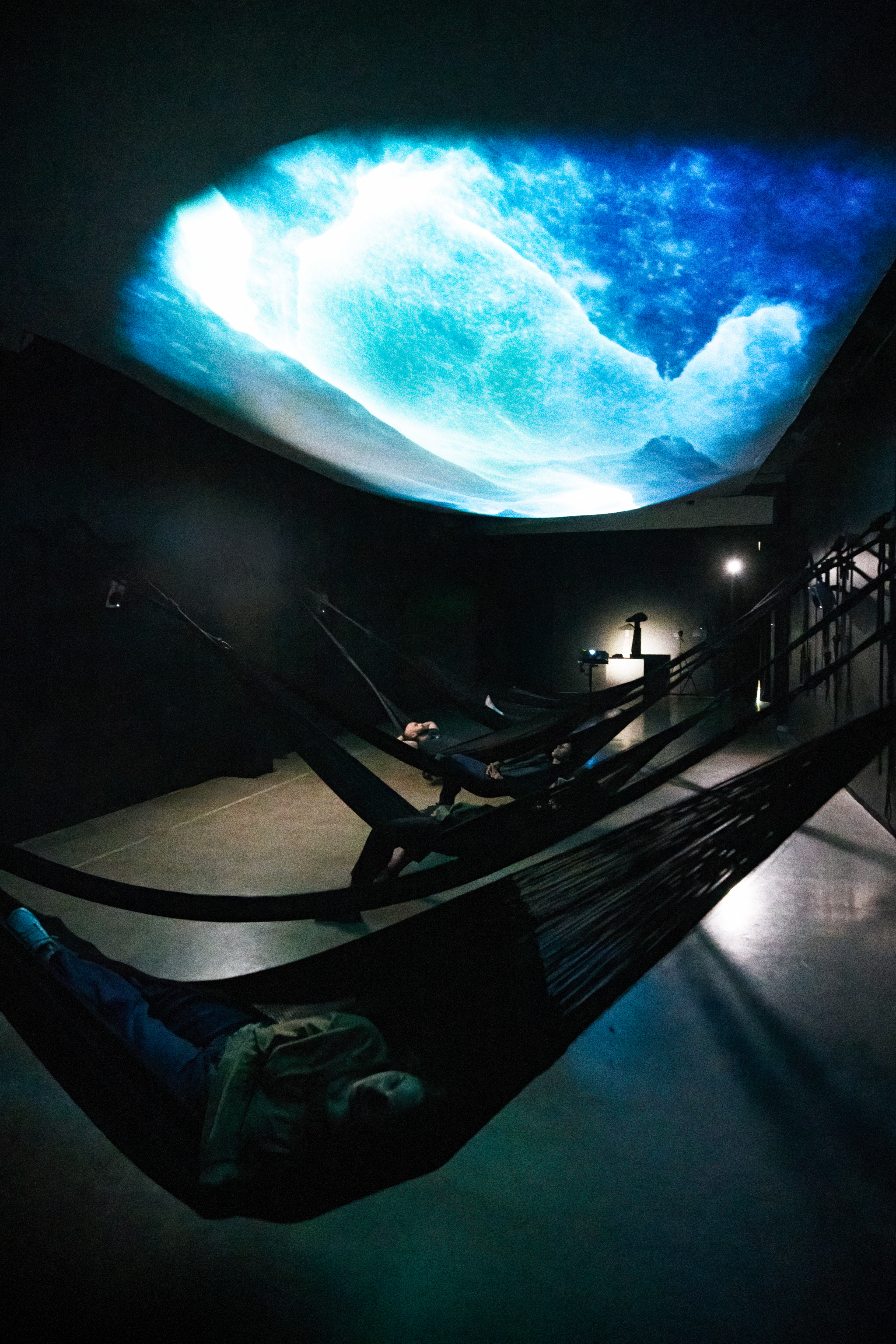
Hammocks act as cocoons, offering a space to rest, dream, and let the world soften. Threads of rope fold linear time into cycles of understanding, and in their gentle suspension one floats, carried and held. Defying gravity, they invite a sense of release, where time bends and the rhythms of the body and environment take precedence over clocks.
In the Yucatán, time moves slowly, even in storms and fast winds. The tropical rhythm, calm in tempest, hammock sway, thunder in the background. These hammocks were specially woven for the show by Edwin Carrillo, who learned the craft during his incarceration. In their fibers, tradition holds and connects, buoying between worlds, carrying both history and possibility.
roca [move rock move]
2026
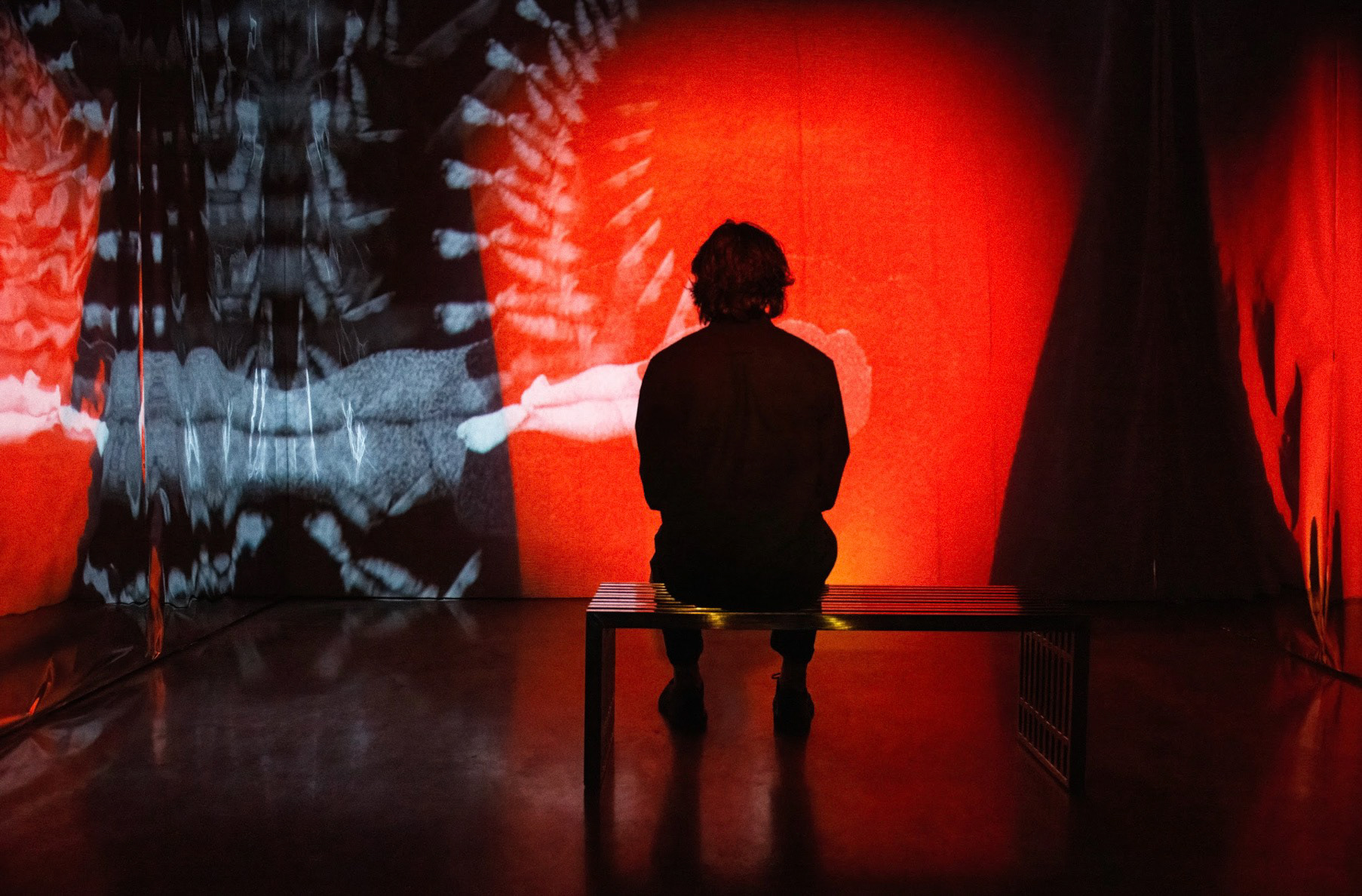
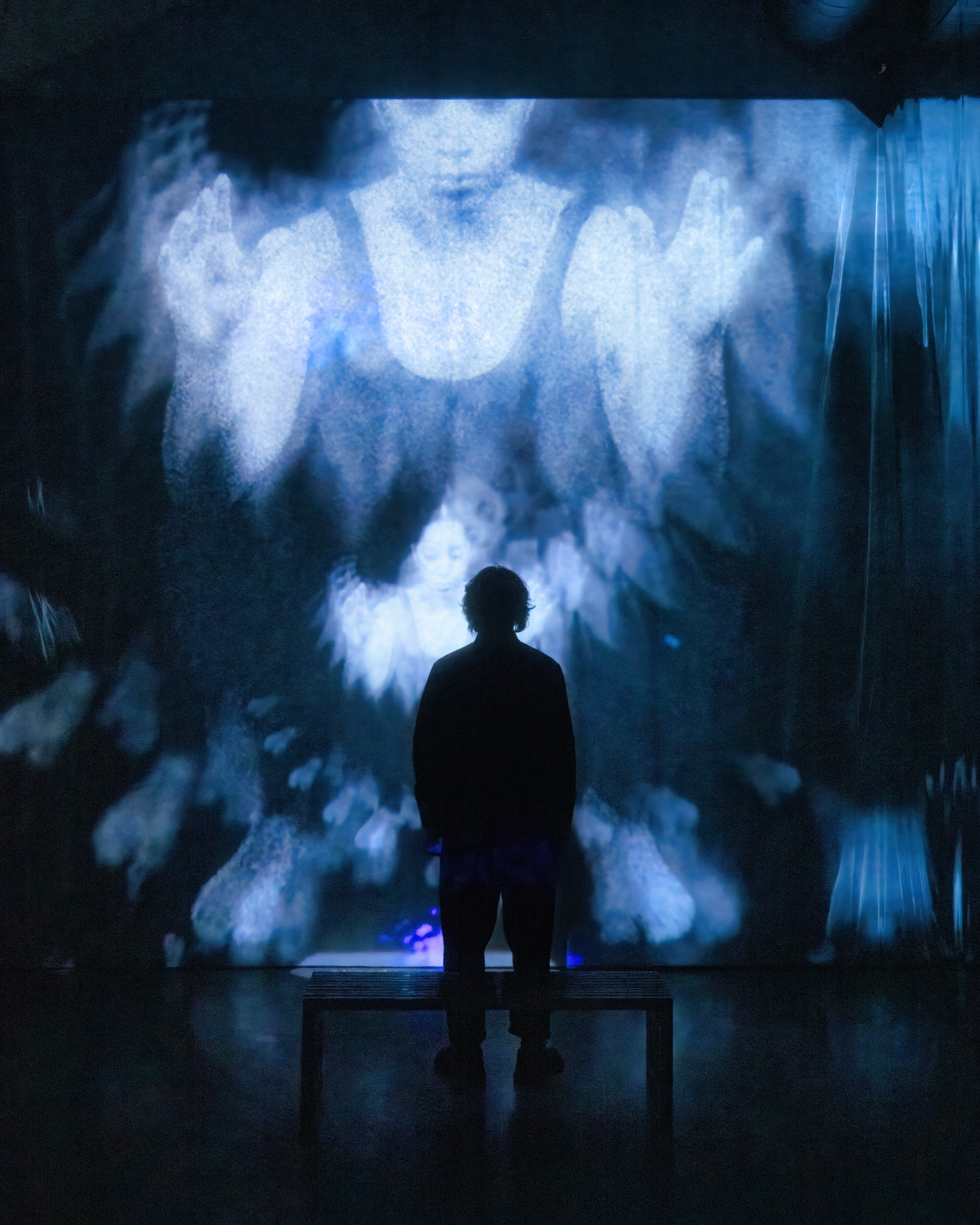
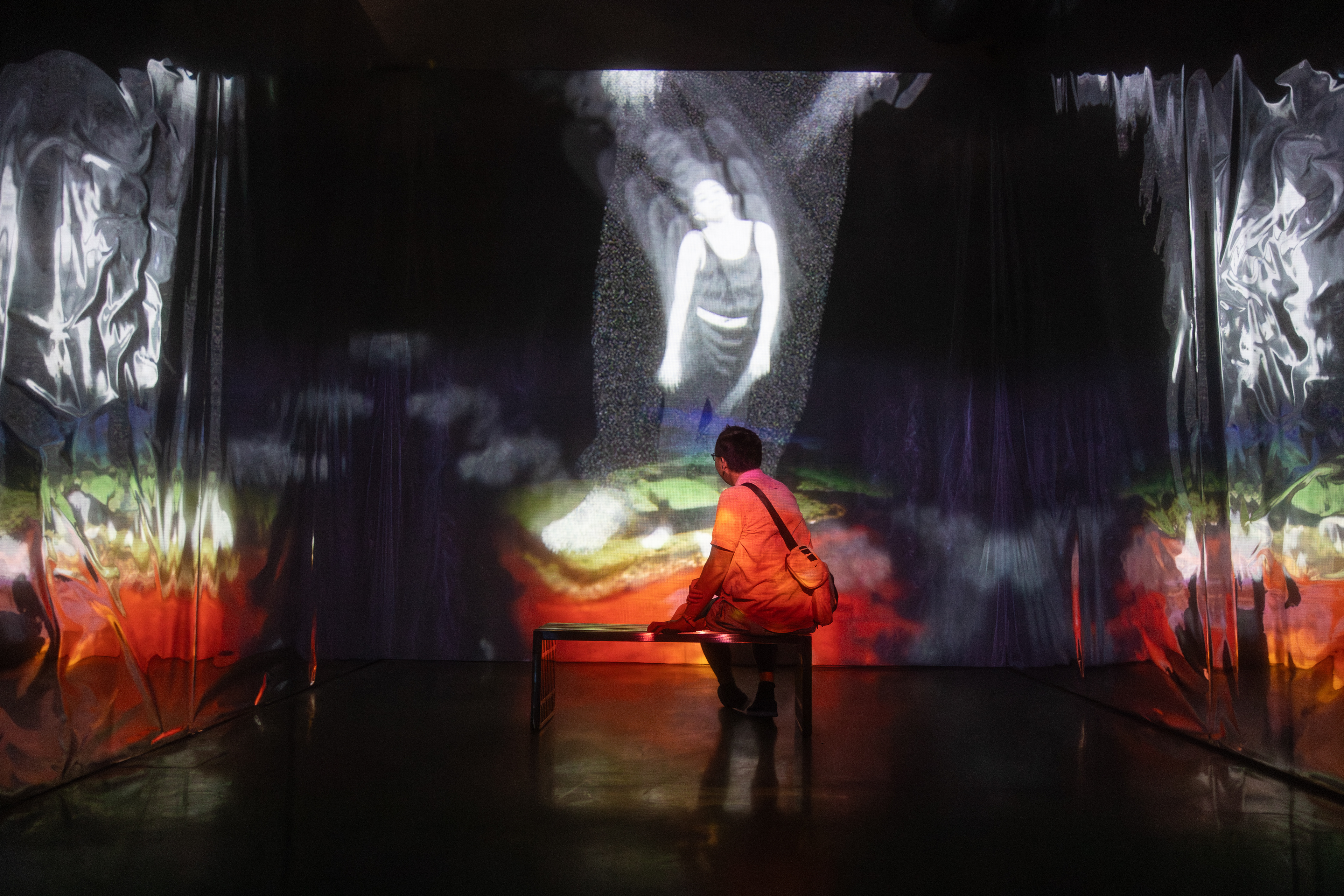
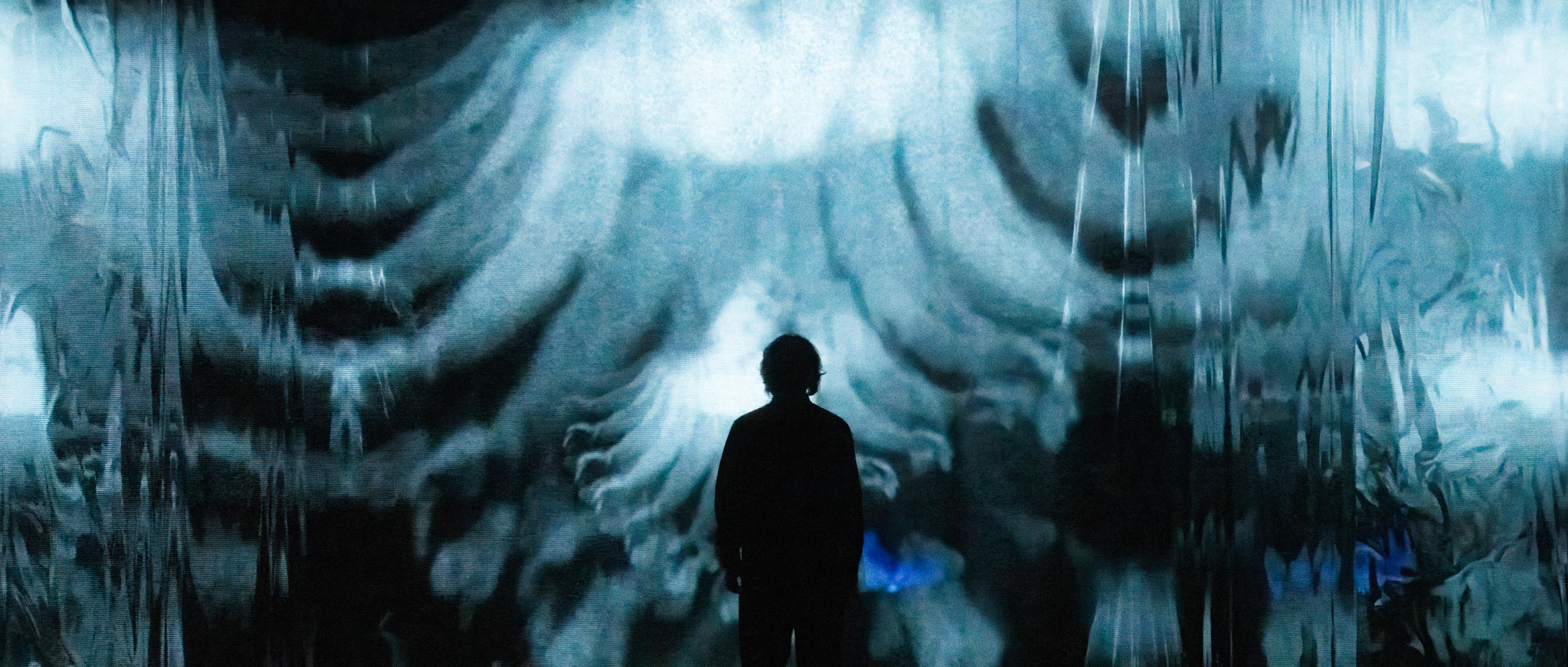
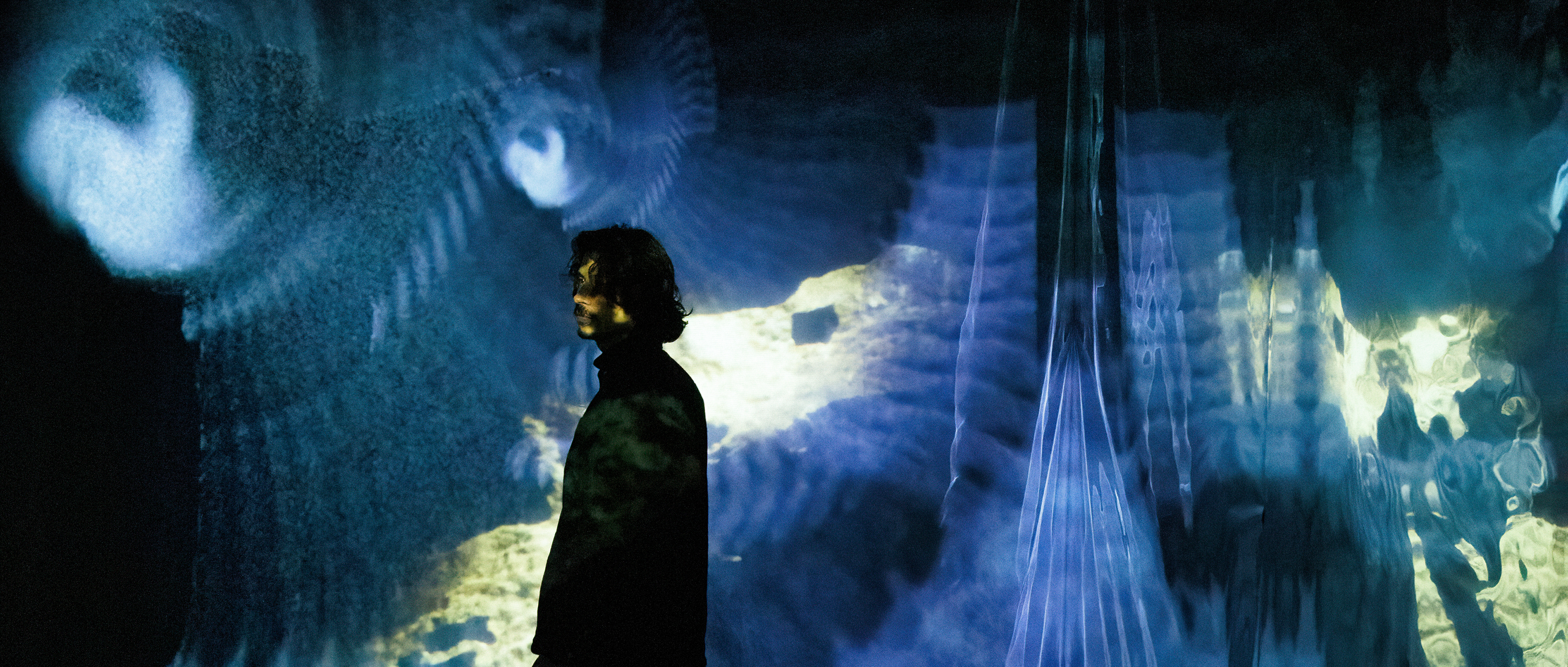
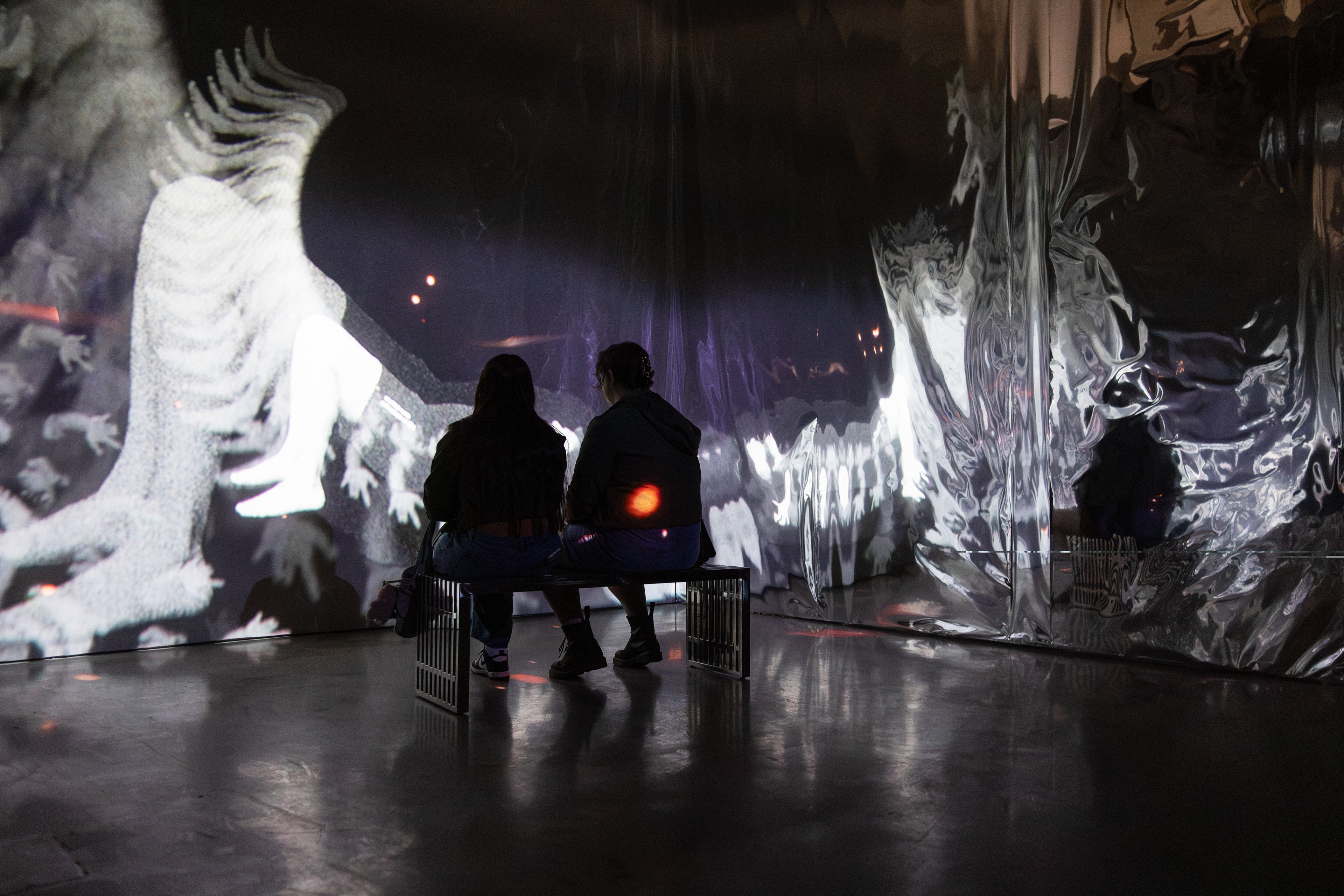
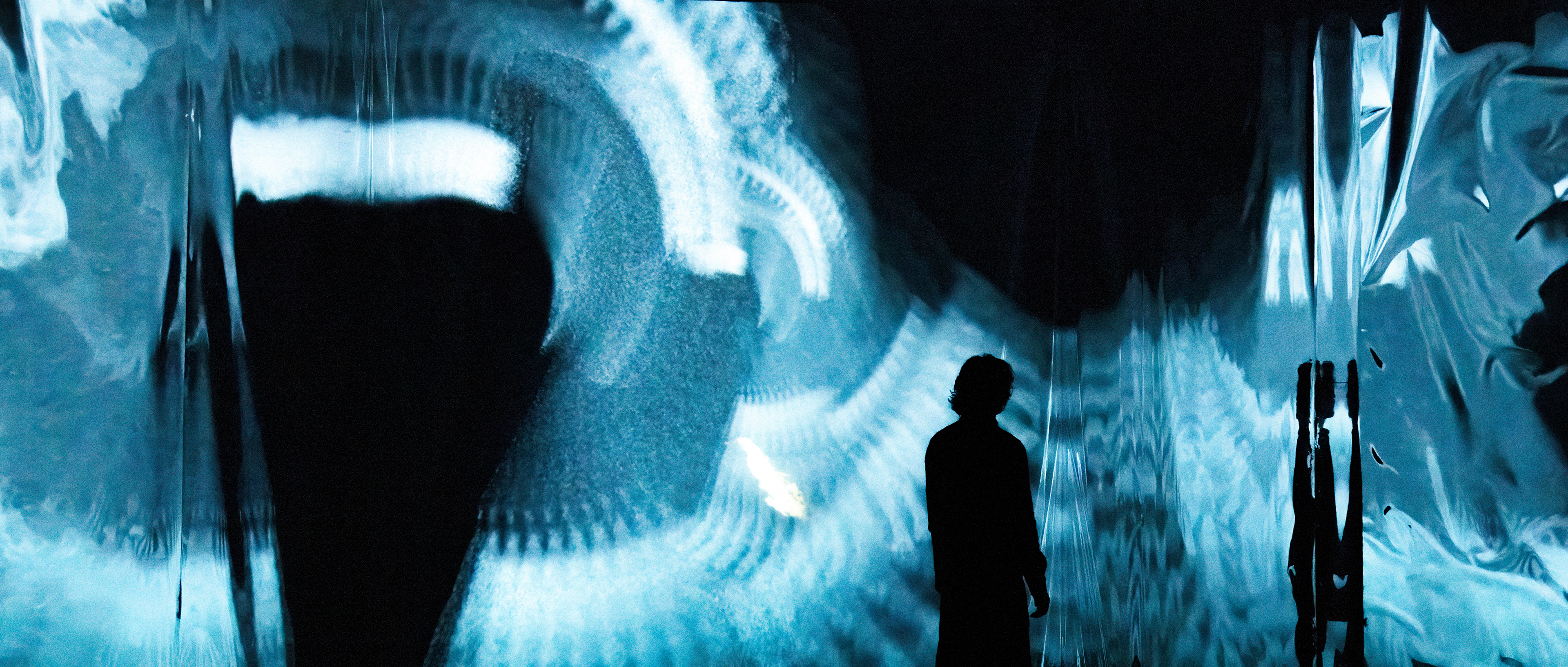
scrim, two-channel projection, custom software, mylar
actors: Nicté del Carmen, Josué May Chí, Mariana Mendoza, Joselyn Amaya, Anna Díaz, Erick Noj
six performers from Campeche teach rocks to move. from finding stillness like a stone to transmuting breath into motion. here bodies vibrate, flow, and dance until they become geology. custom computer vision software captured their movement and simulated it for over 1,000 years. the resulting data animates digital rocks.
=•̀⌂•́= ///⚡︎\\\ ~>°)~~~
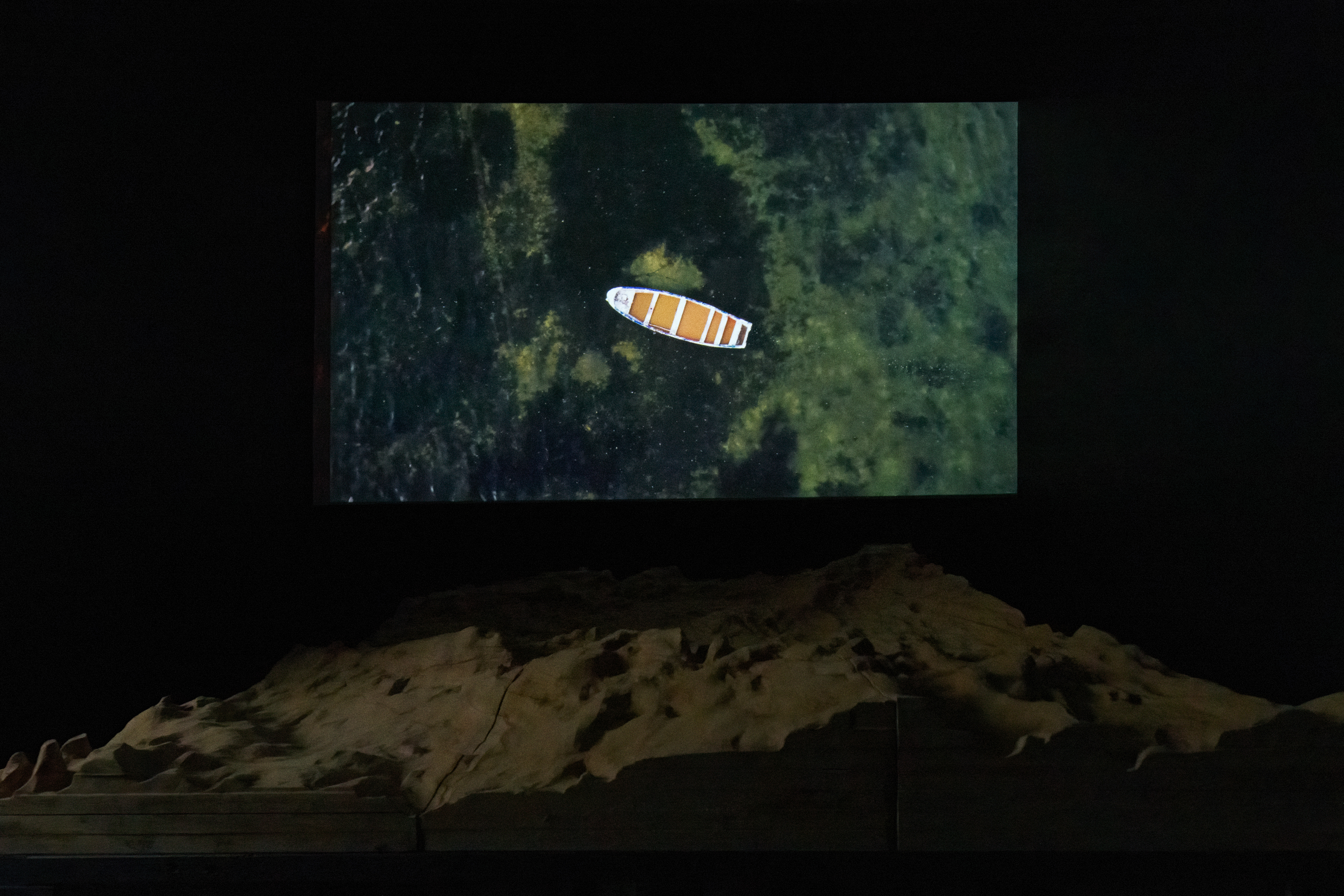
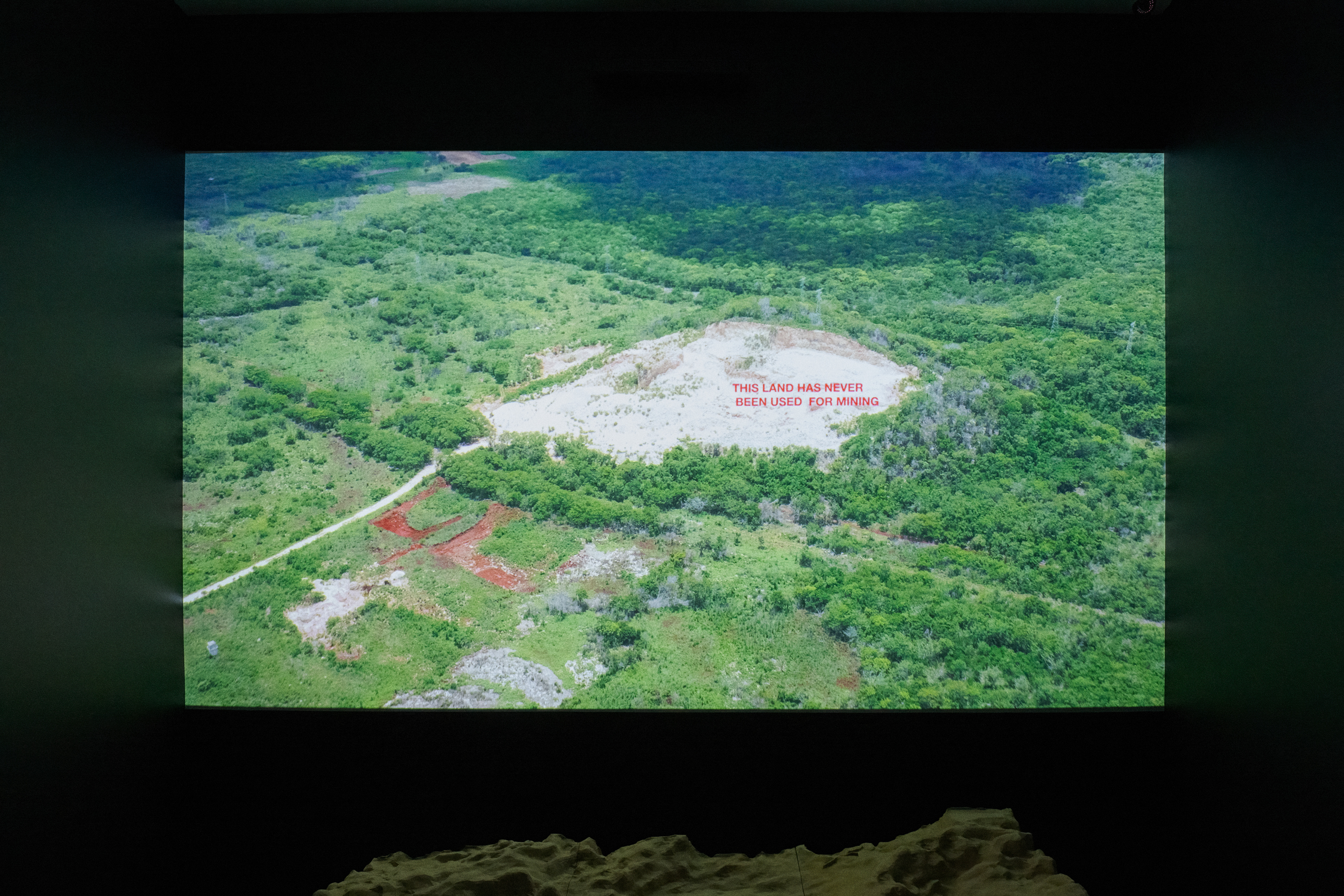
Impacto, 2020–2026
documentary of 20+ short films rooted in the Chicxulub crater, tracing ecological transformation from past to present.☄️ ☄️ ☄️
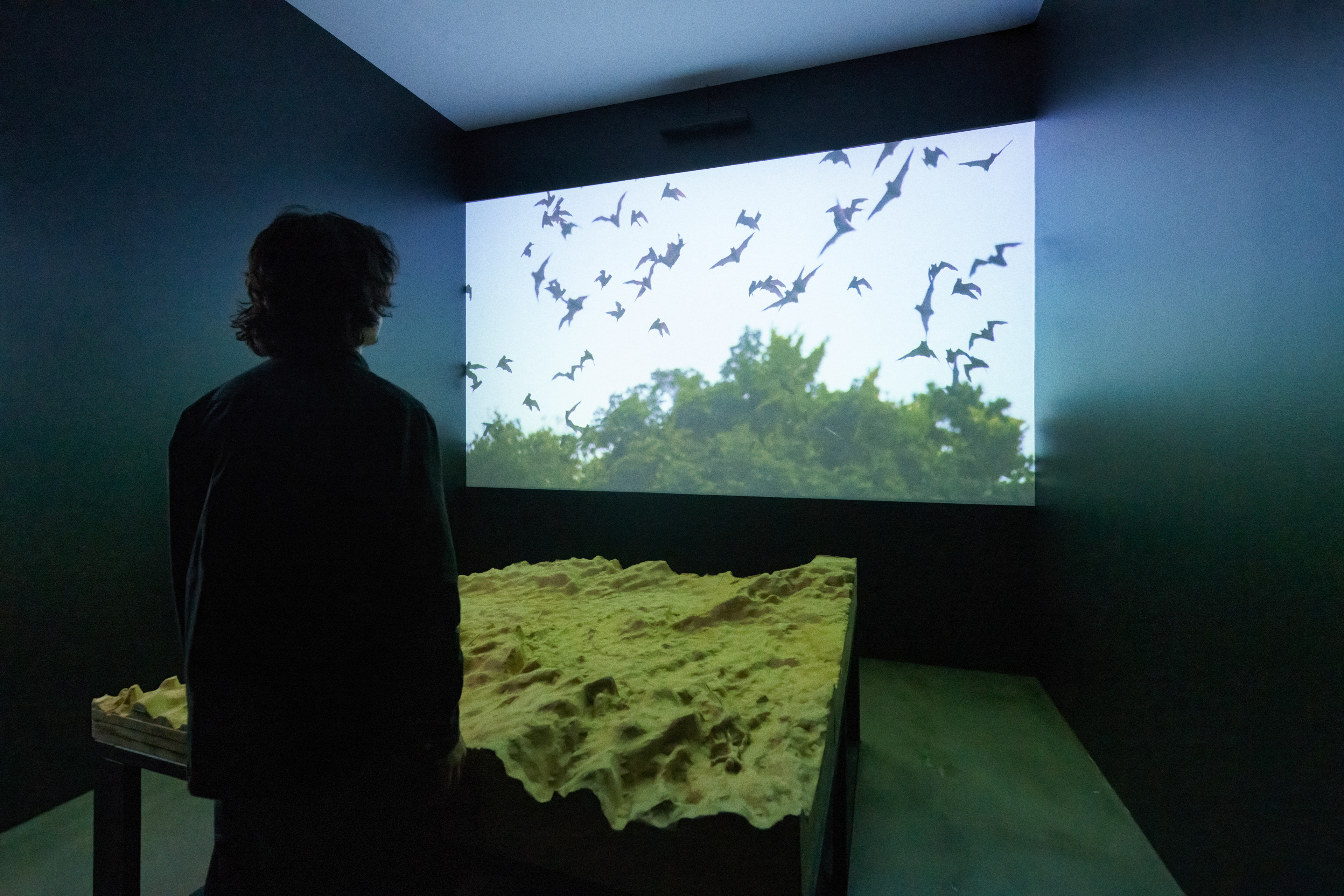
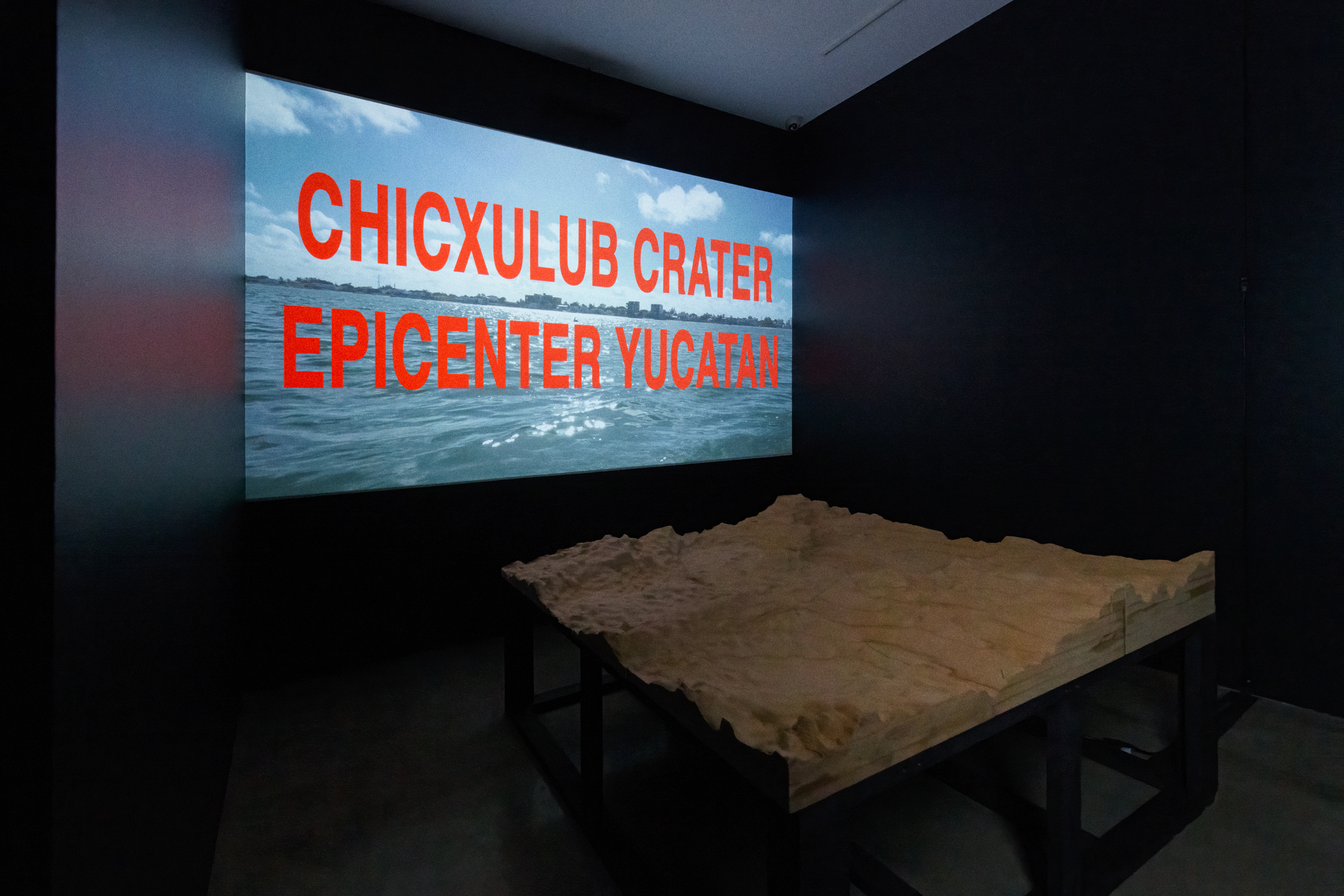
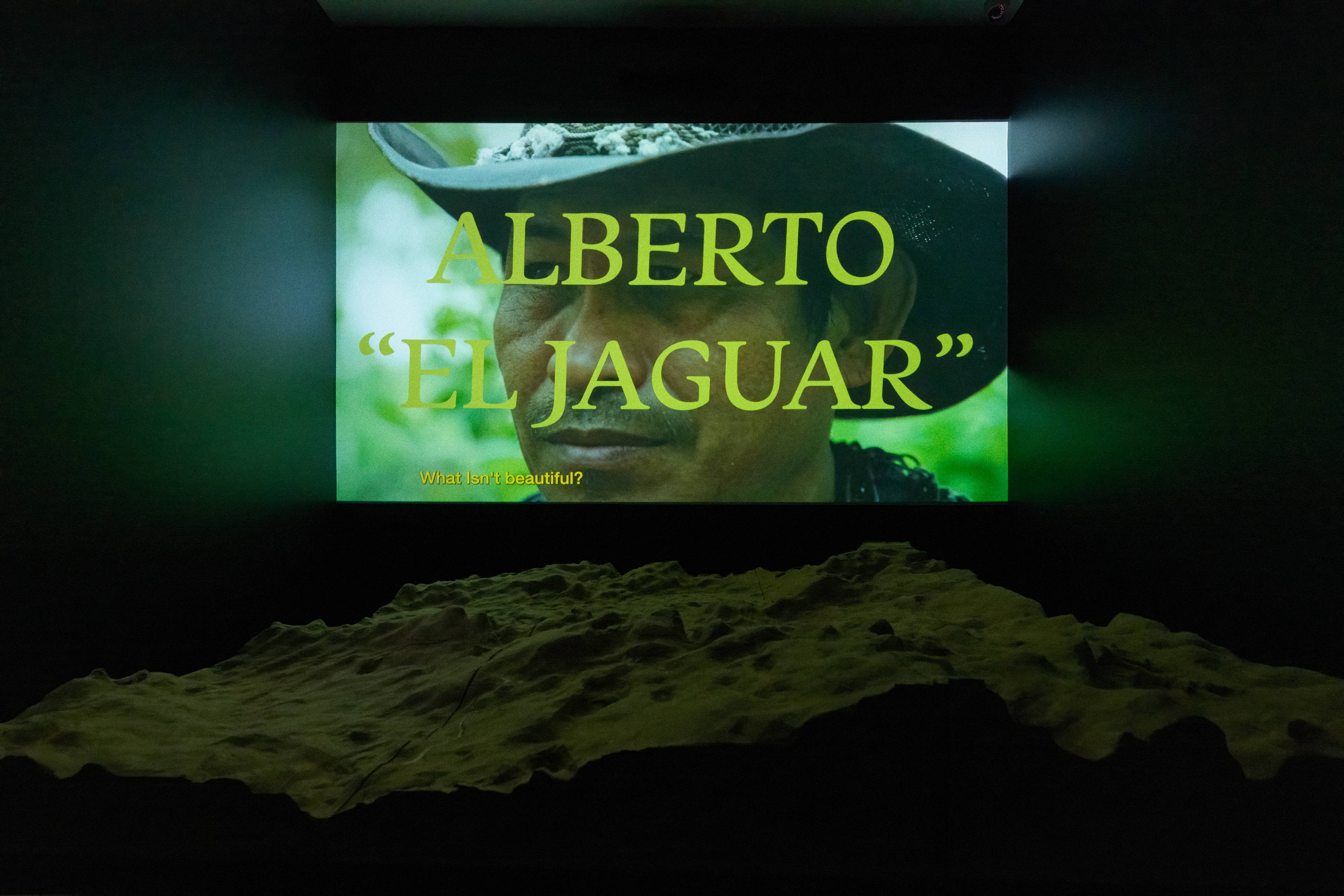
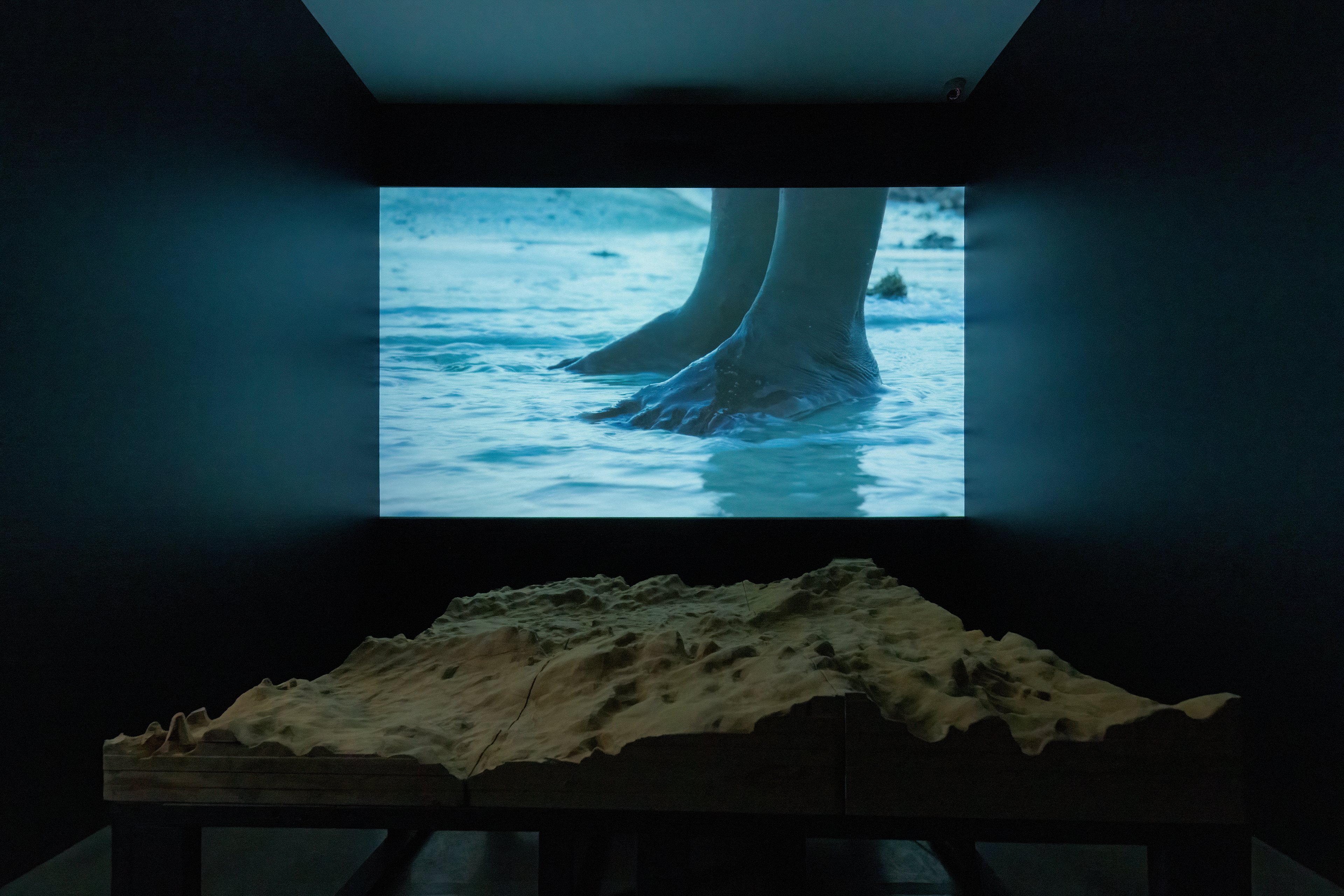
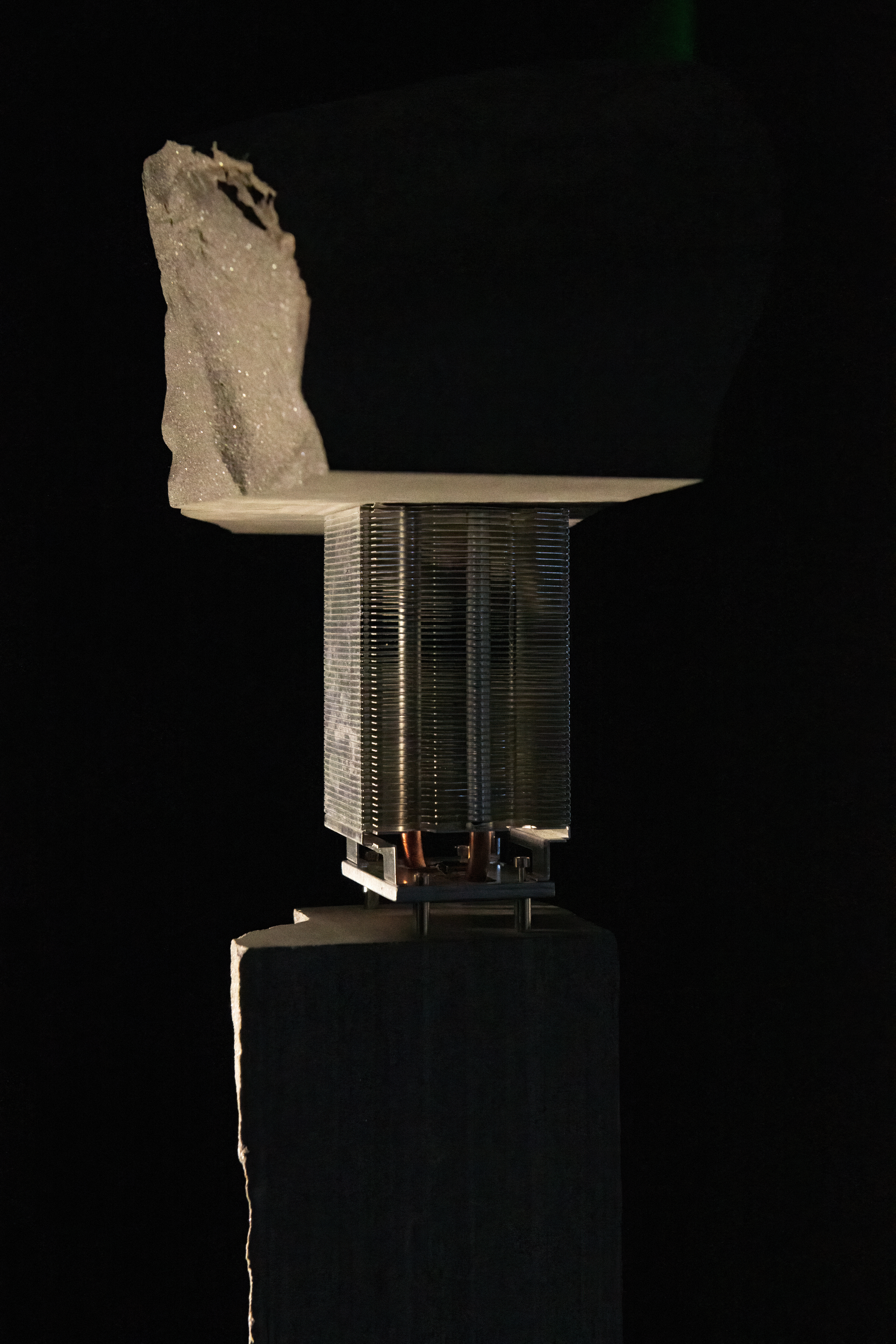
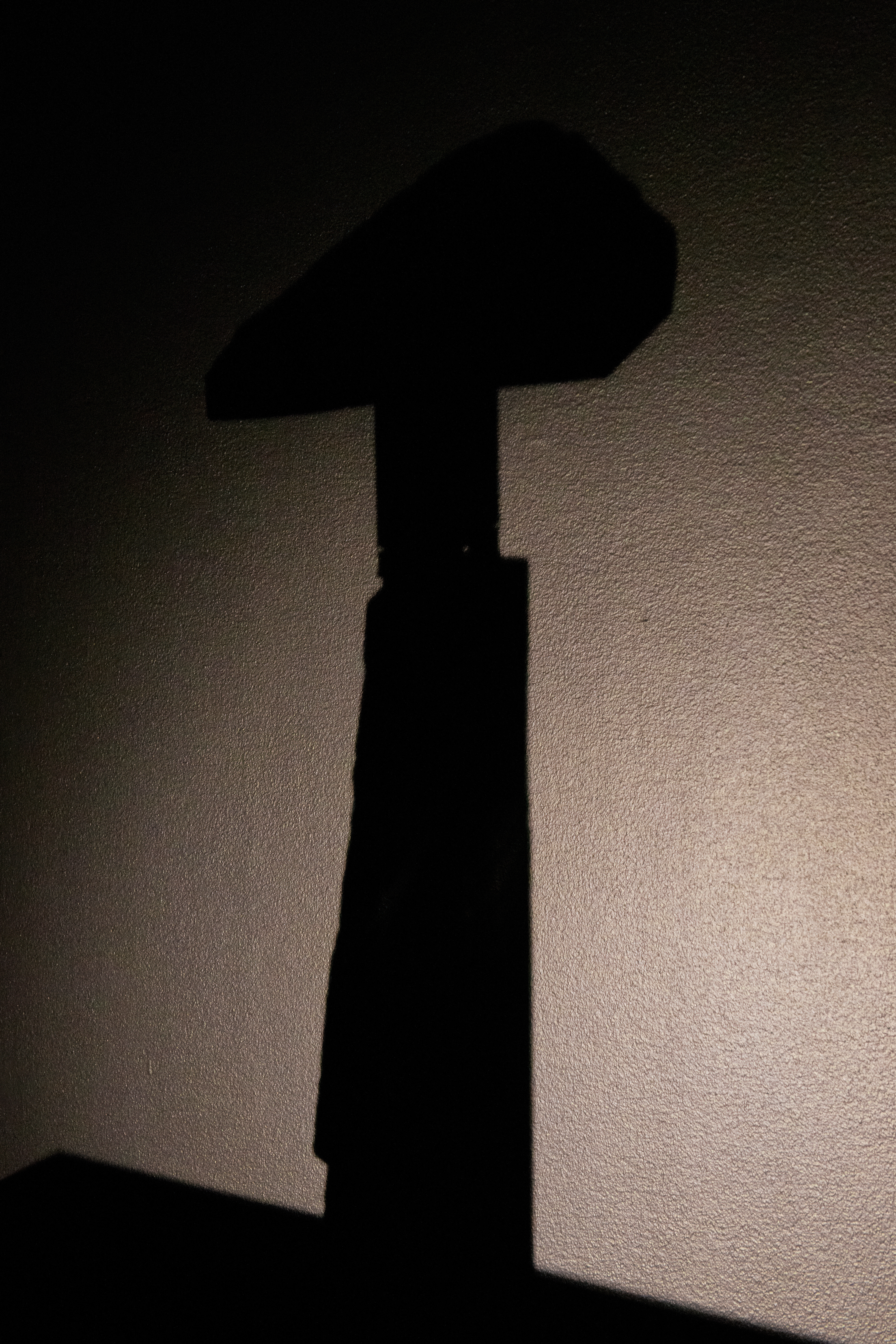
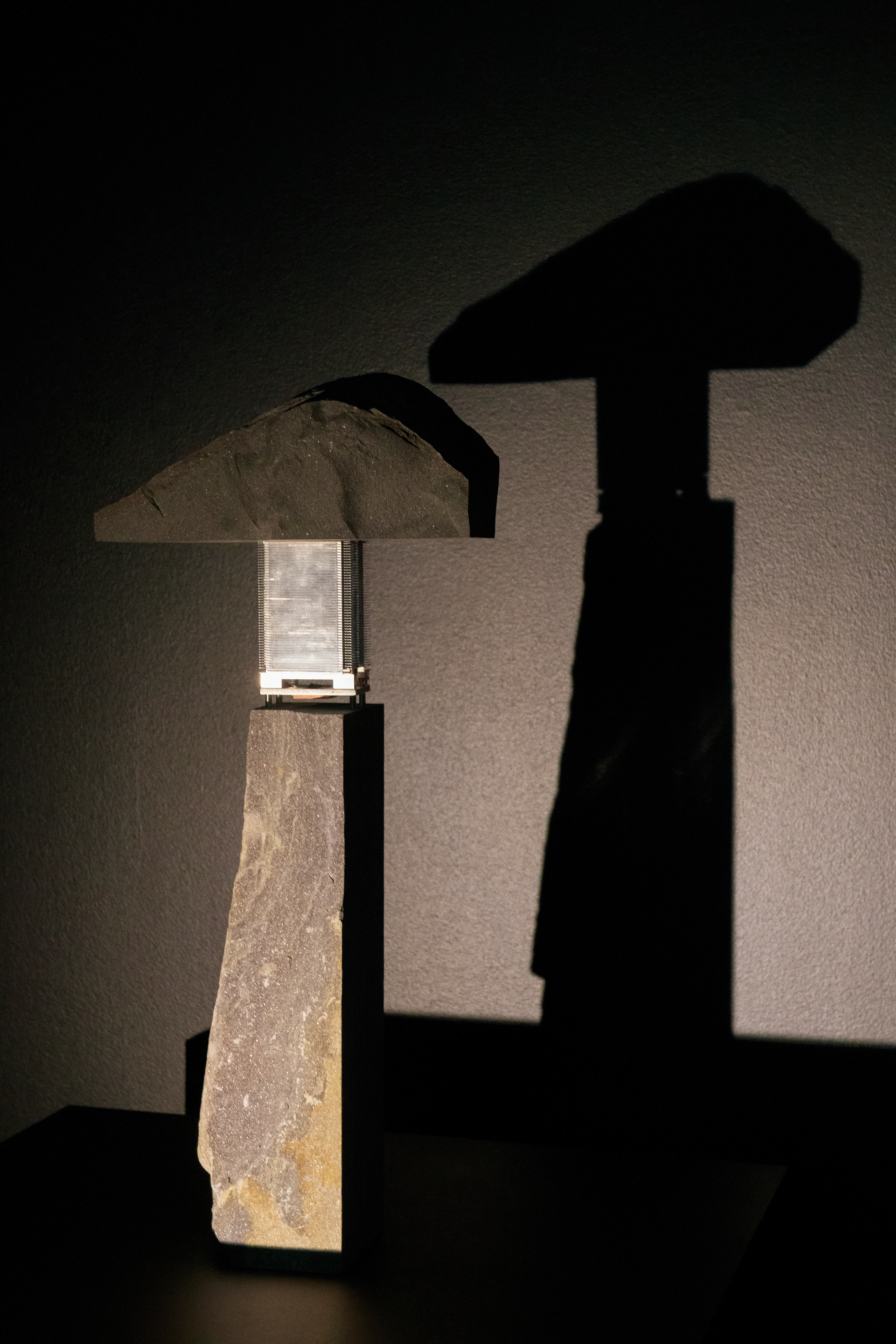
Ik, negro, noche, 2026
two basalt rocks and a heat sink forming Ik’, the Maya glyph for wind, breath, and life force.
▪️ ▪️ ▪️
/|\ ^._.^ /|\
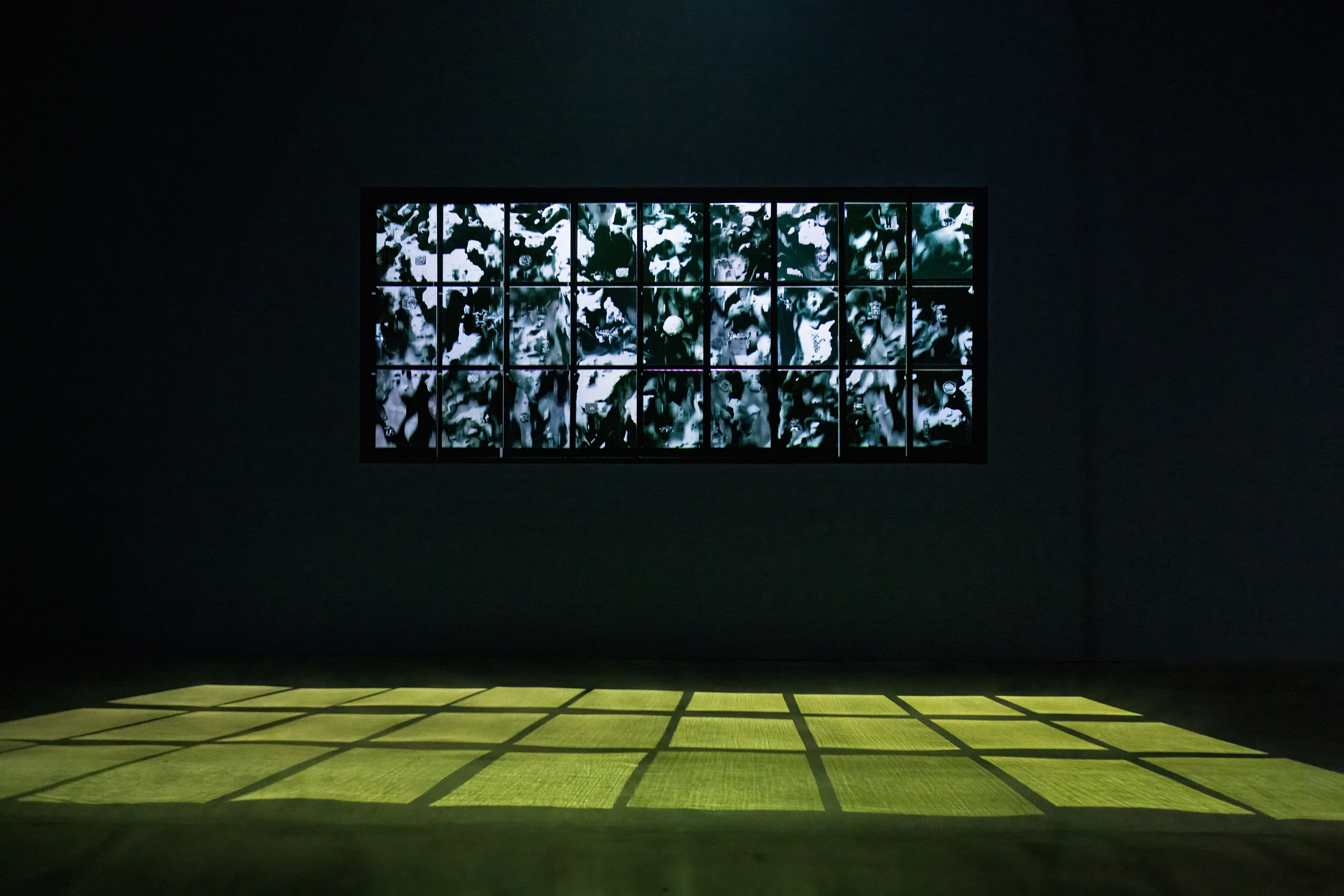
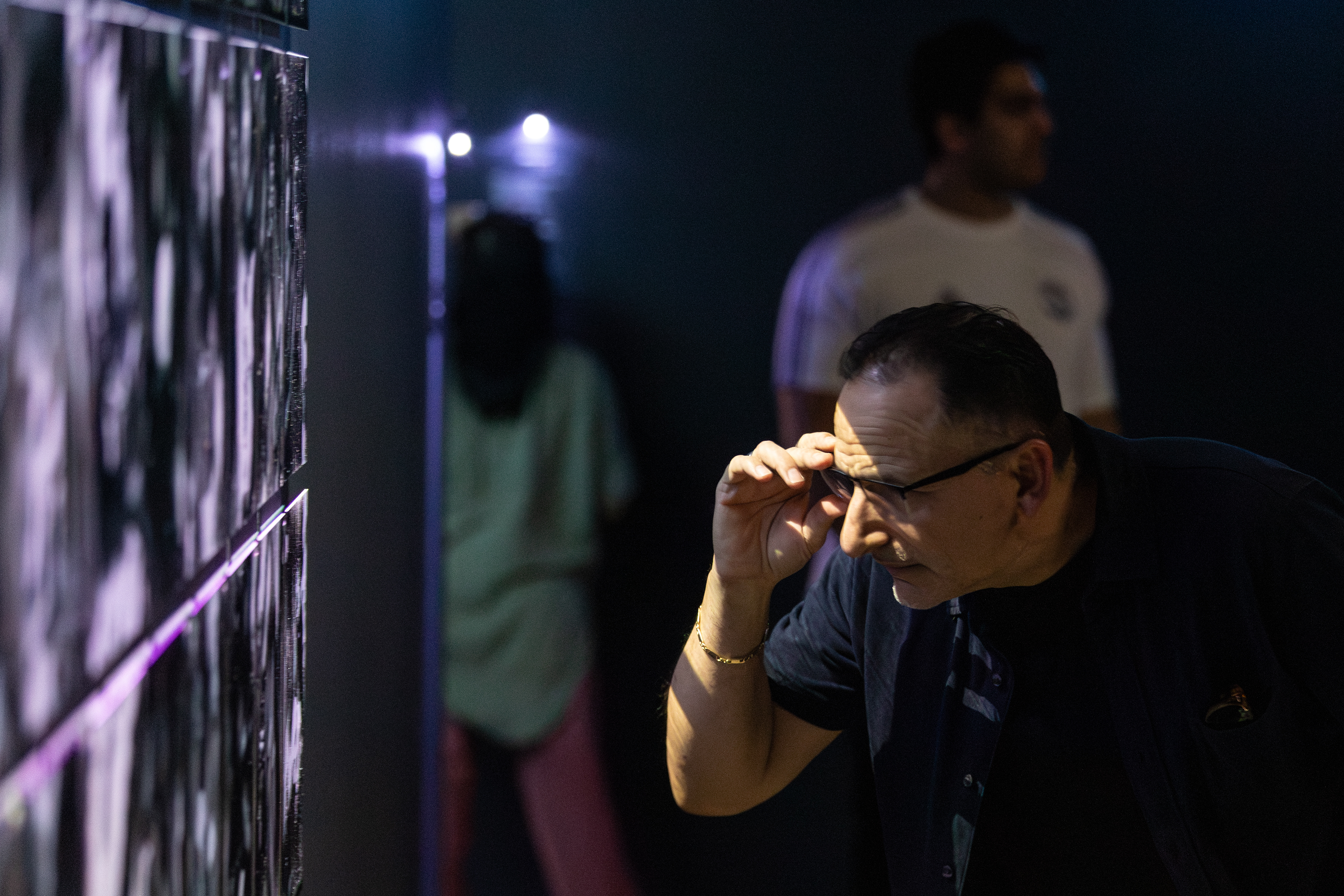
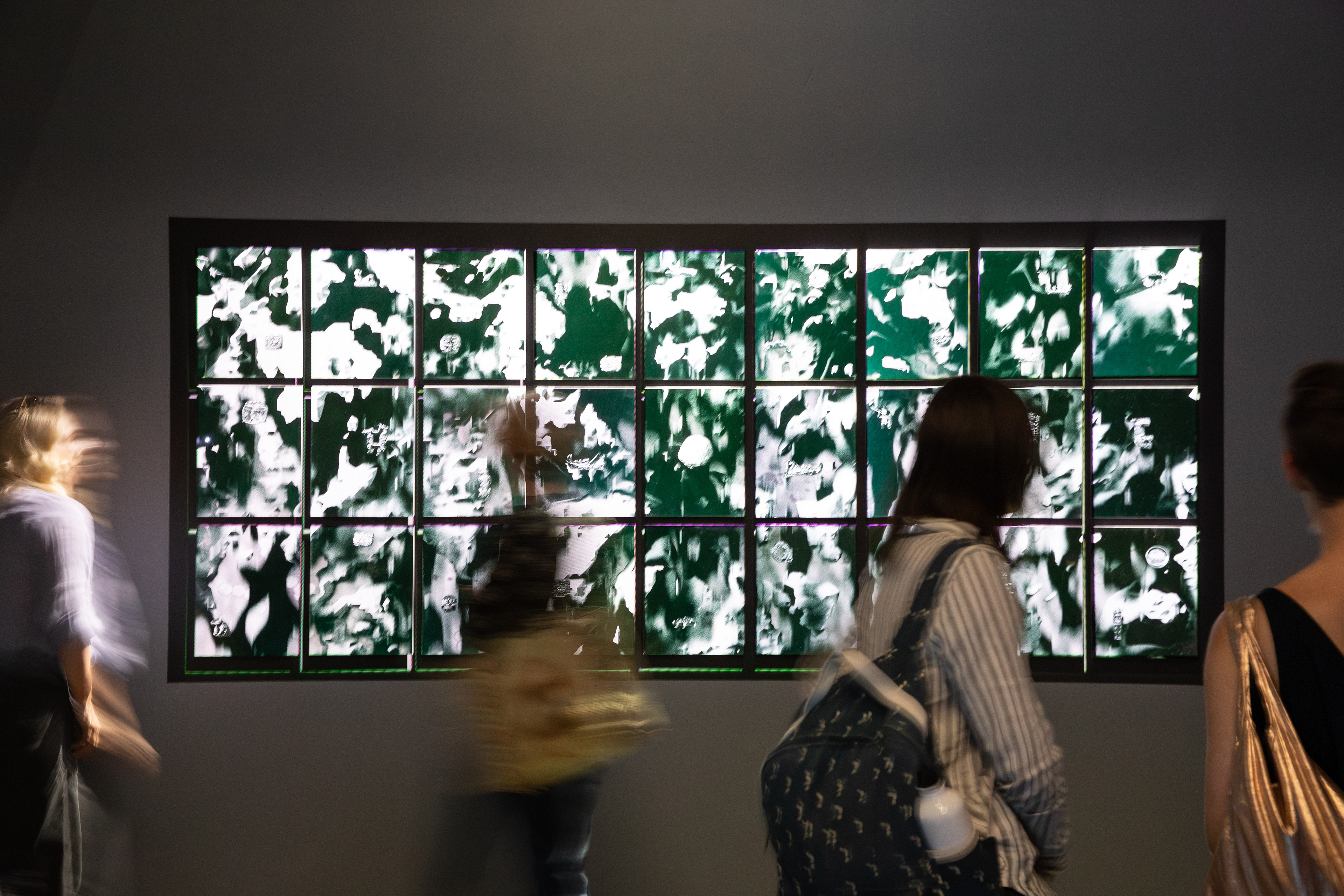
eekcheen [cenote negro]
27 aluminum prints and projection. Maya glyphs reclaimed into a contemporary mural of geological and cosmological time.
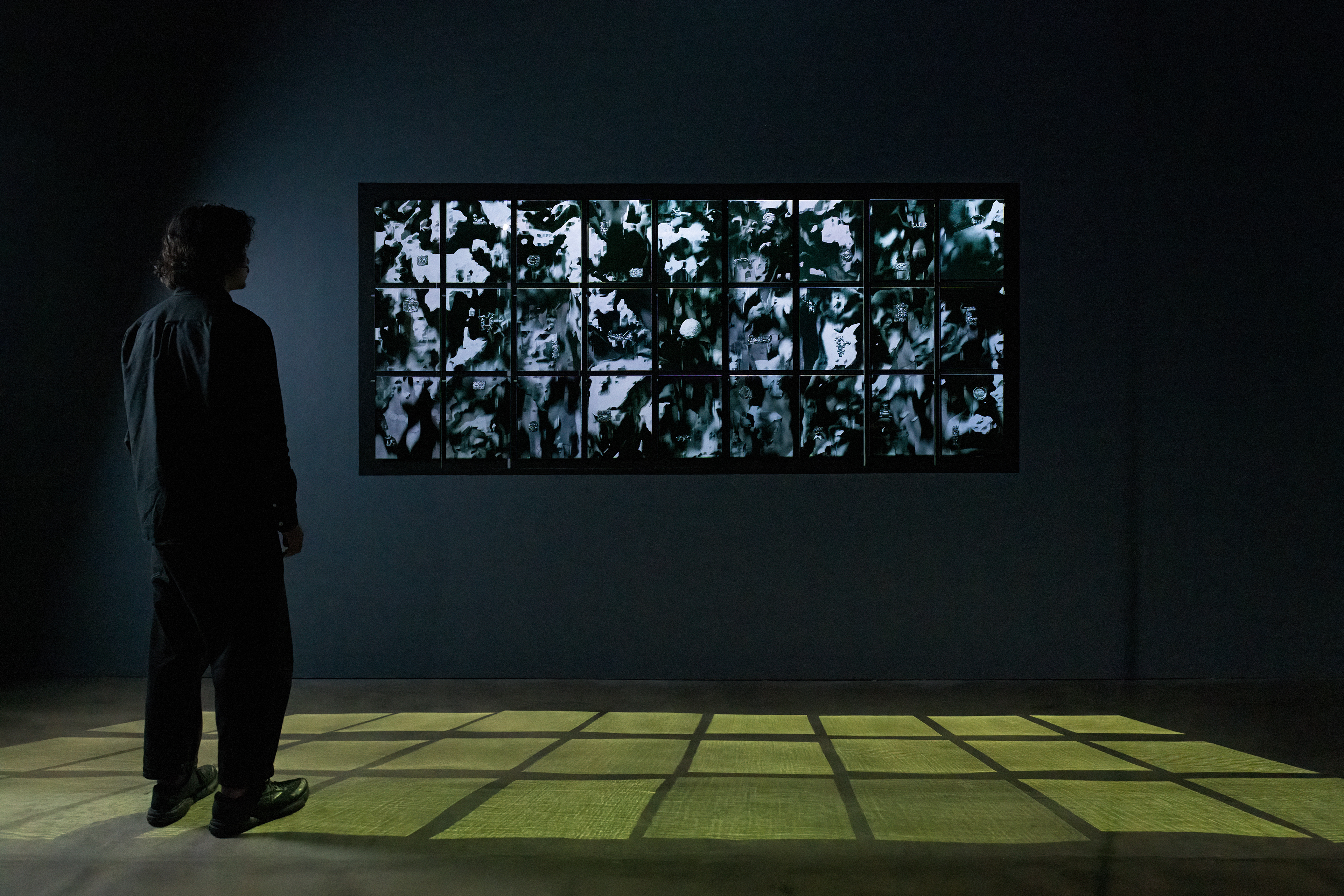
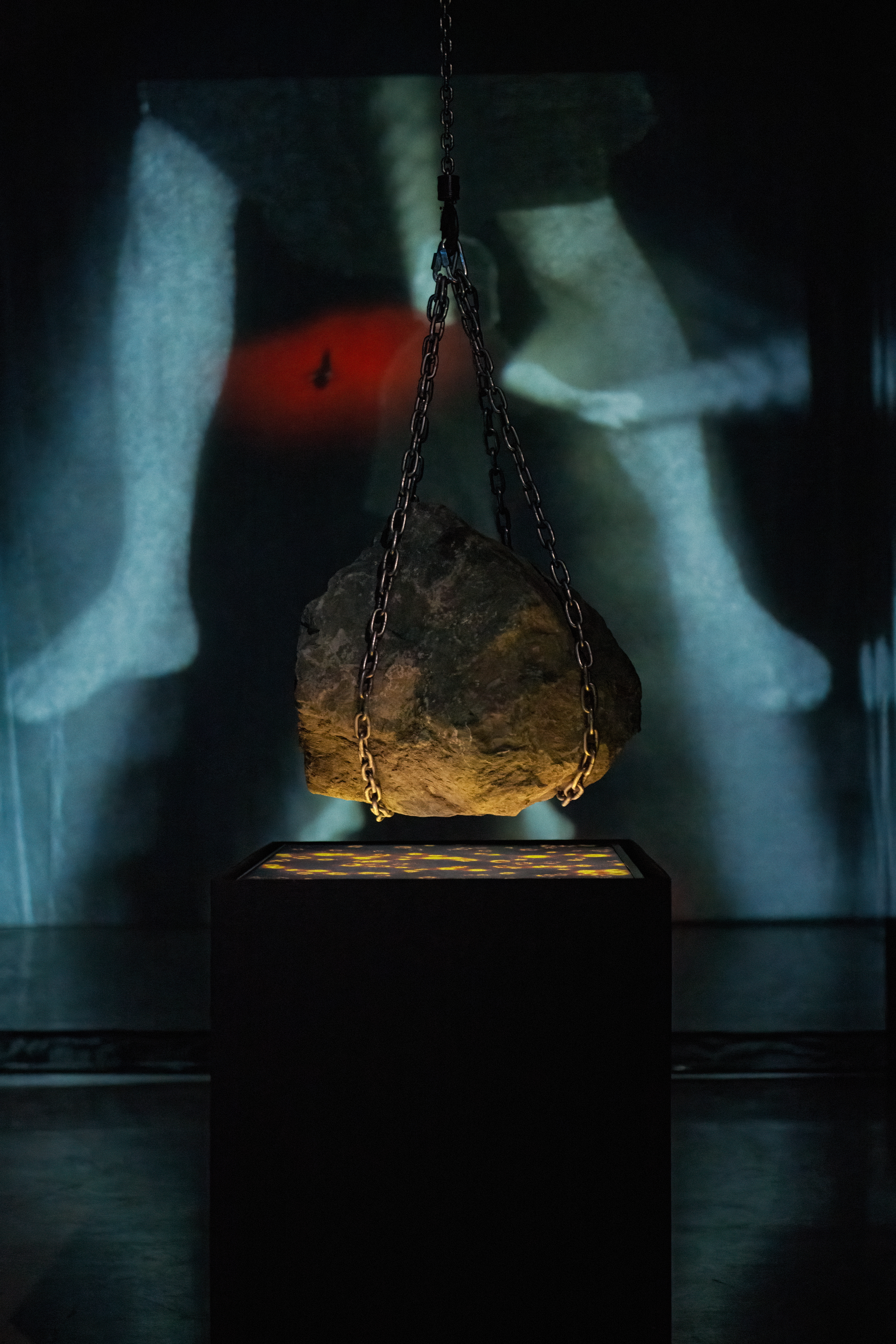
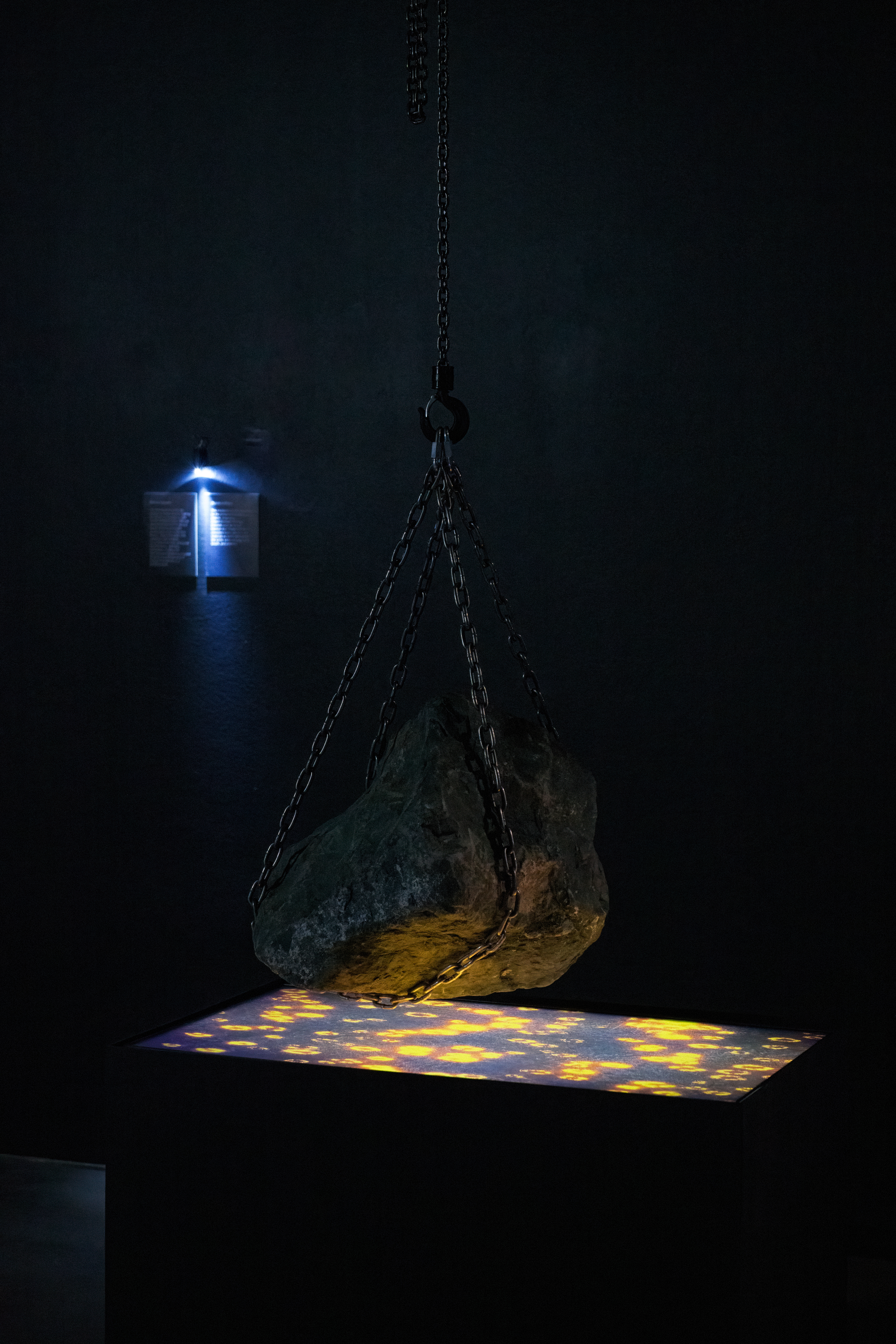
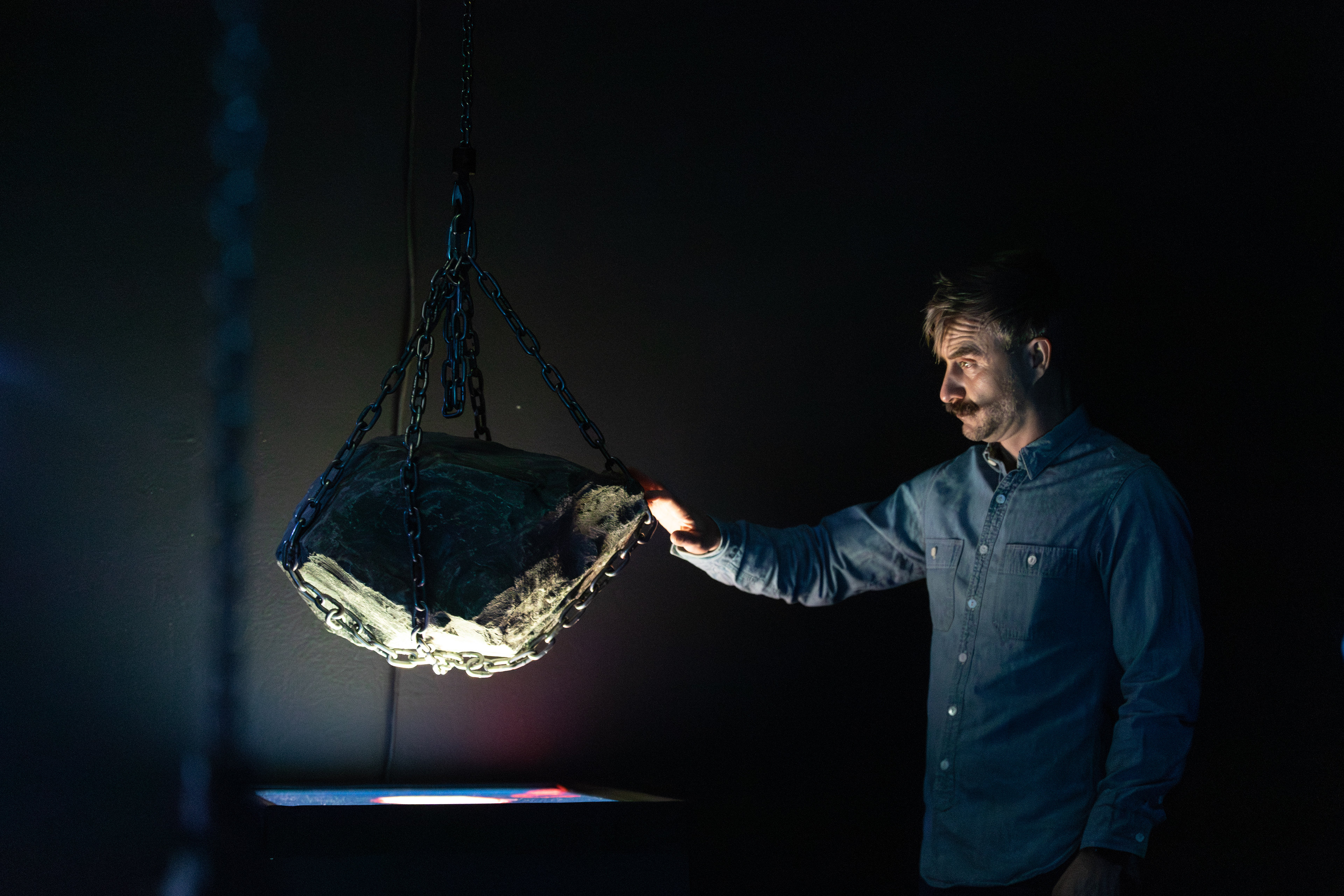
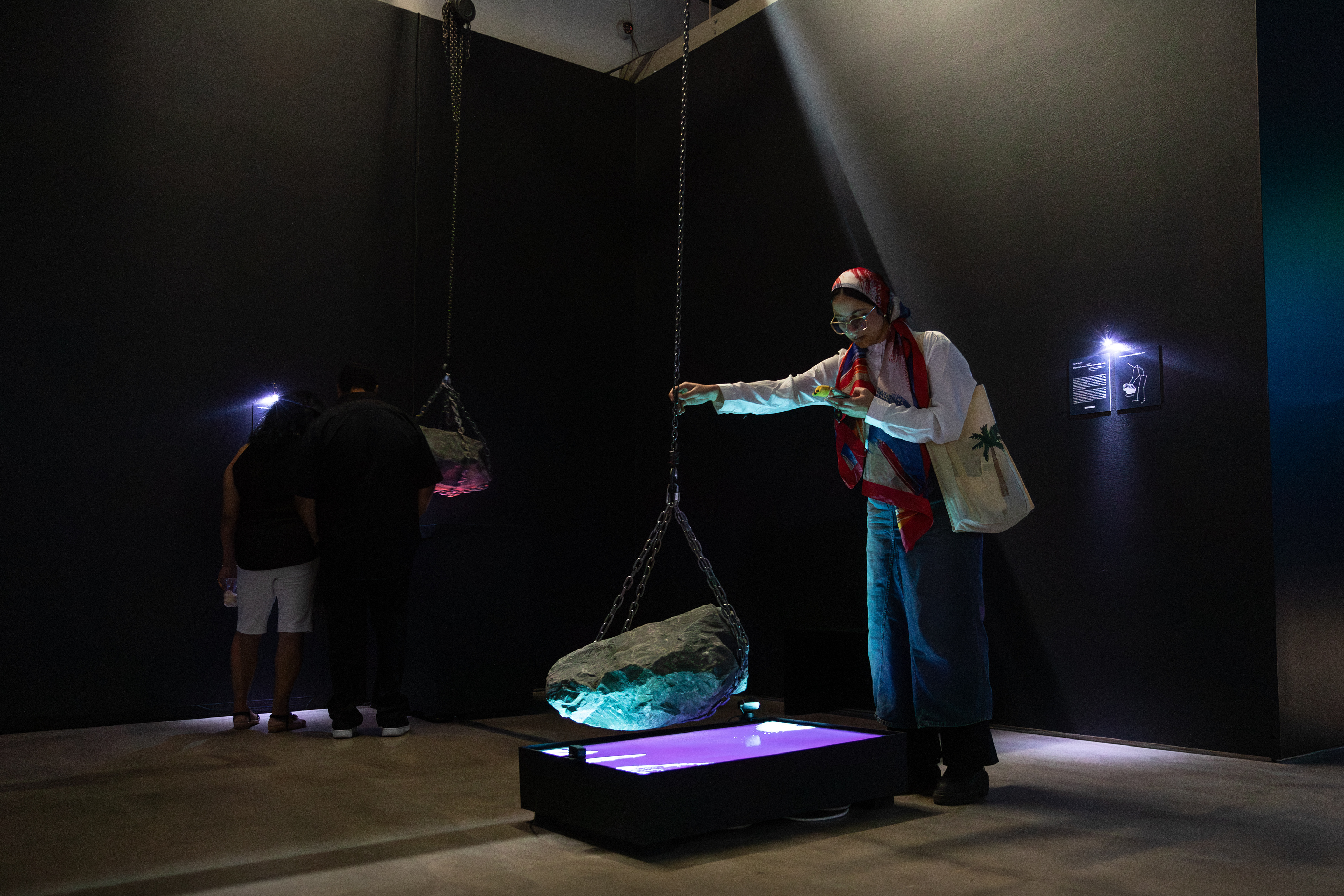
rocks_ [murciélago, jaguar, serpiente y cocodrilo], 2026
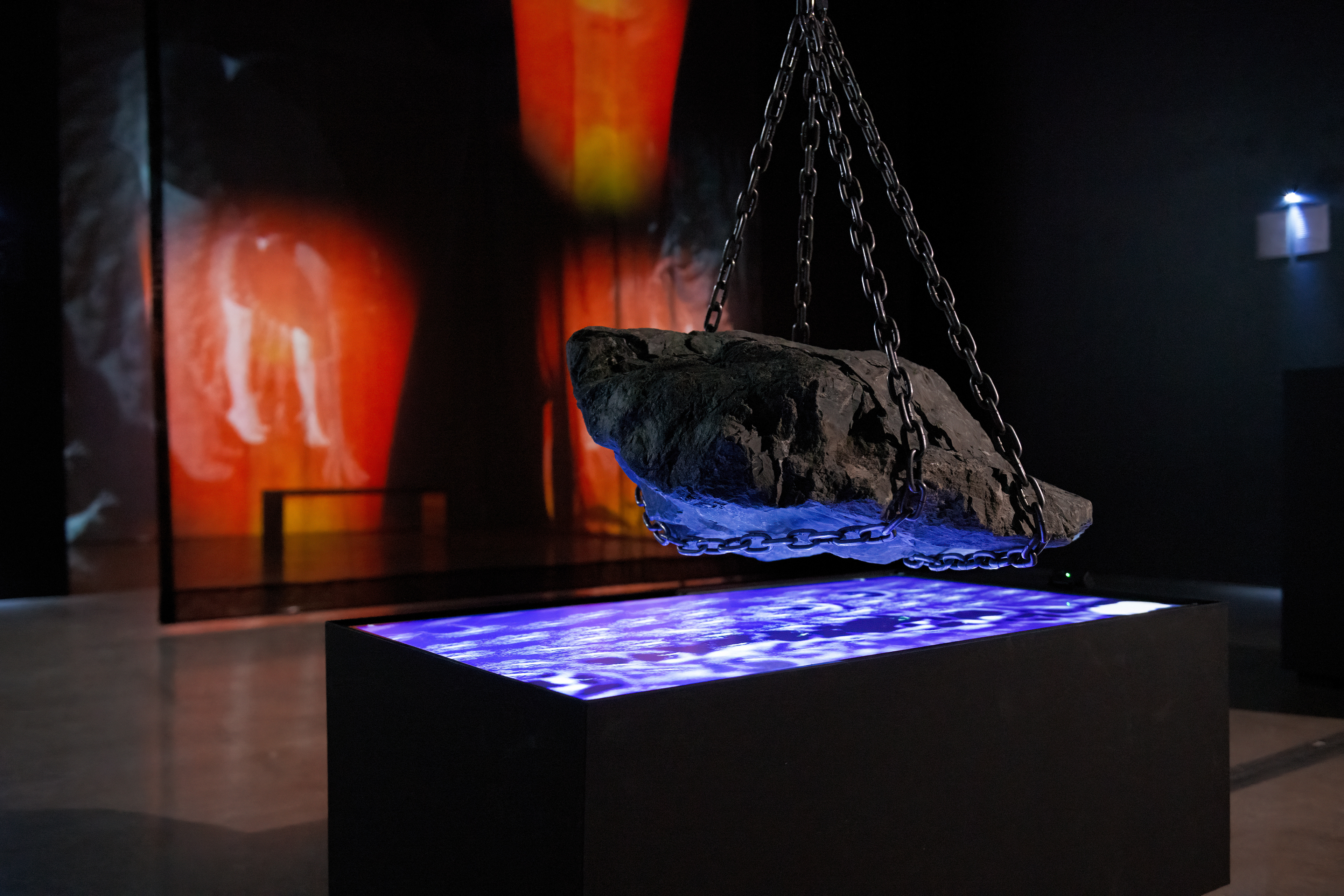
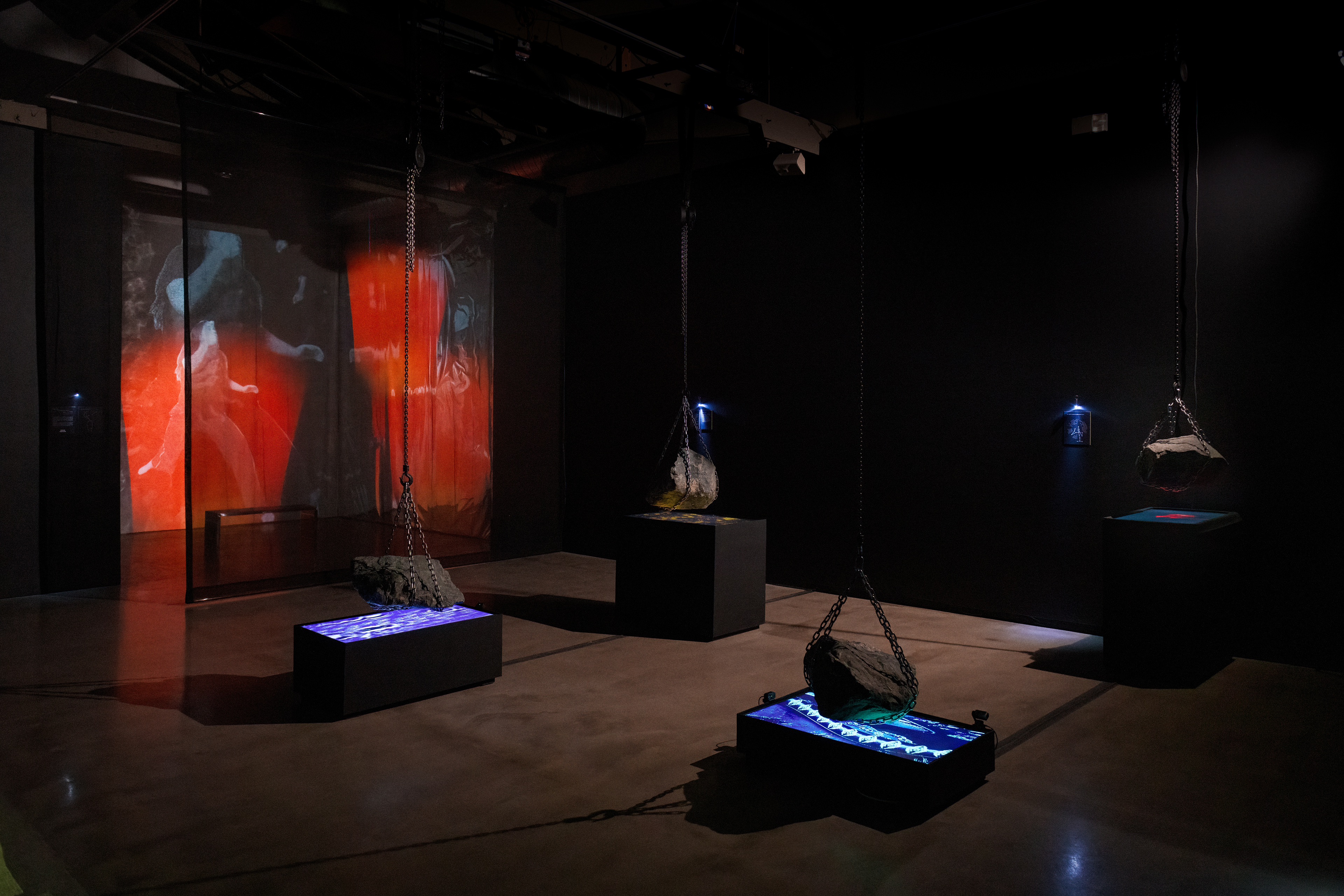
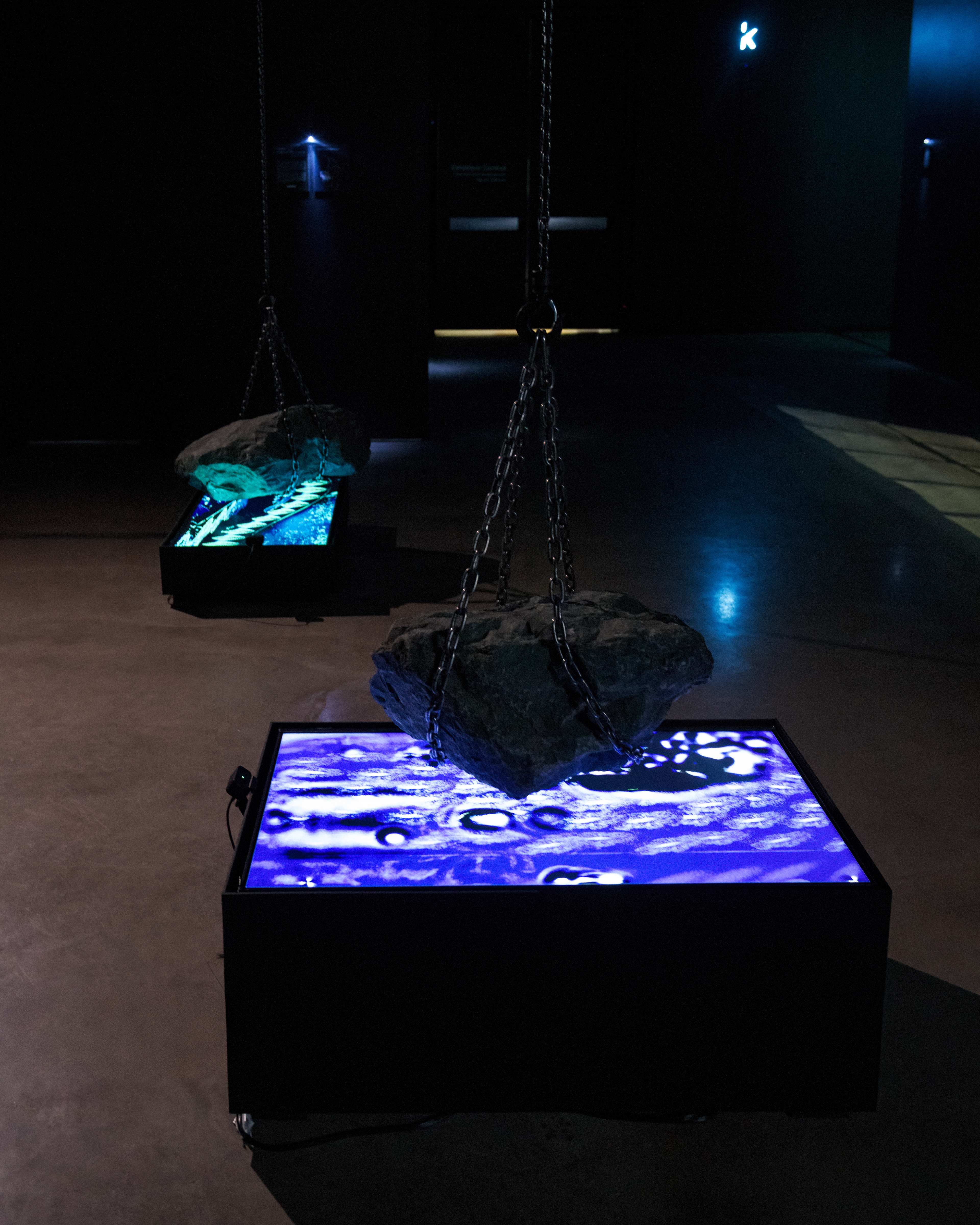
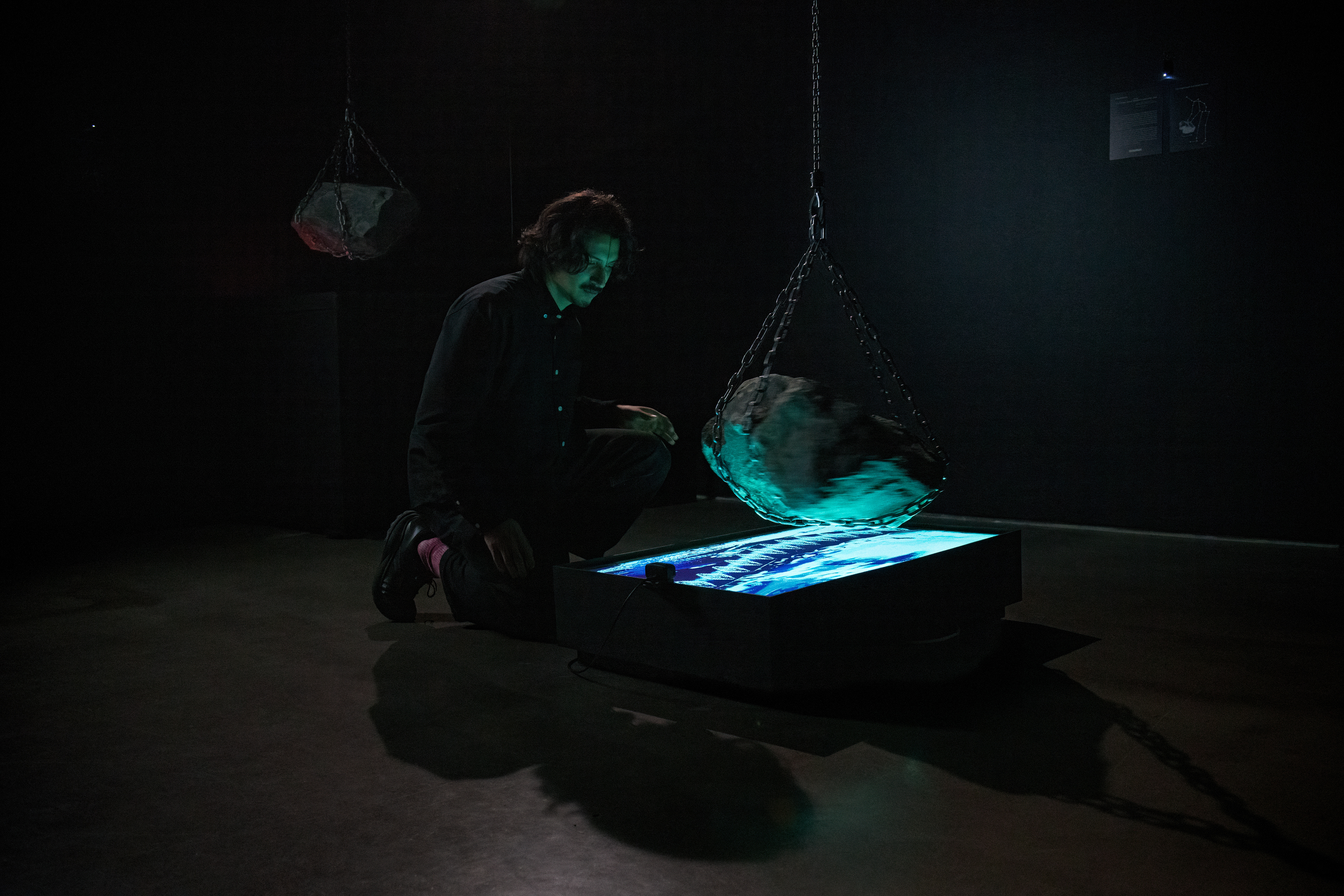
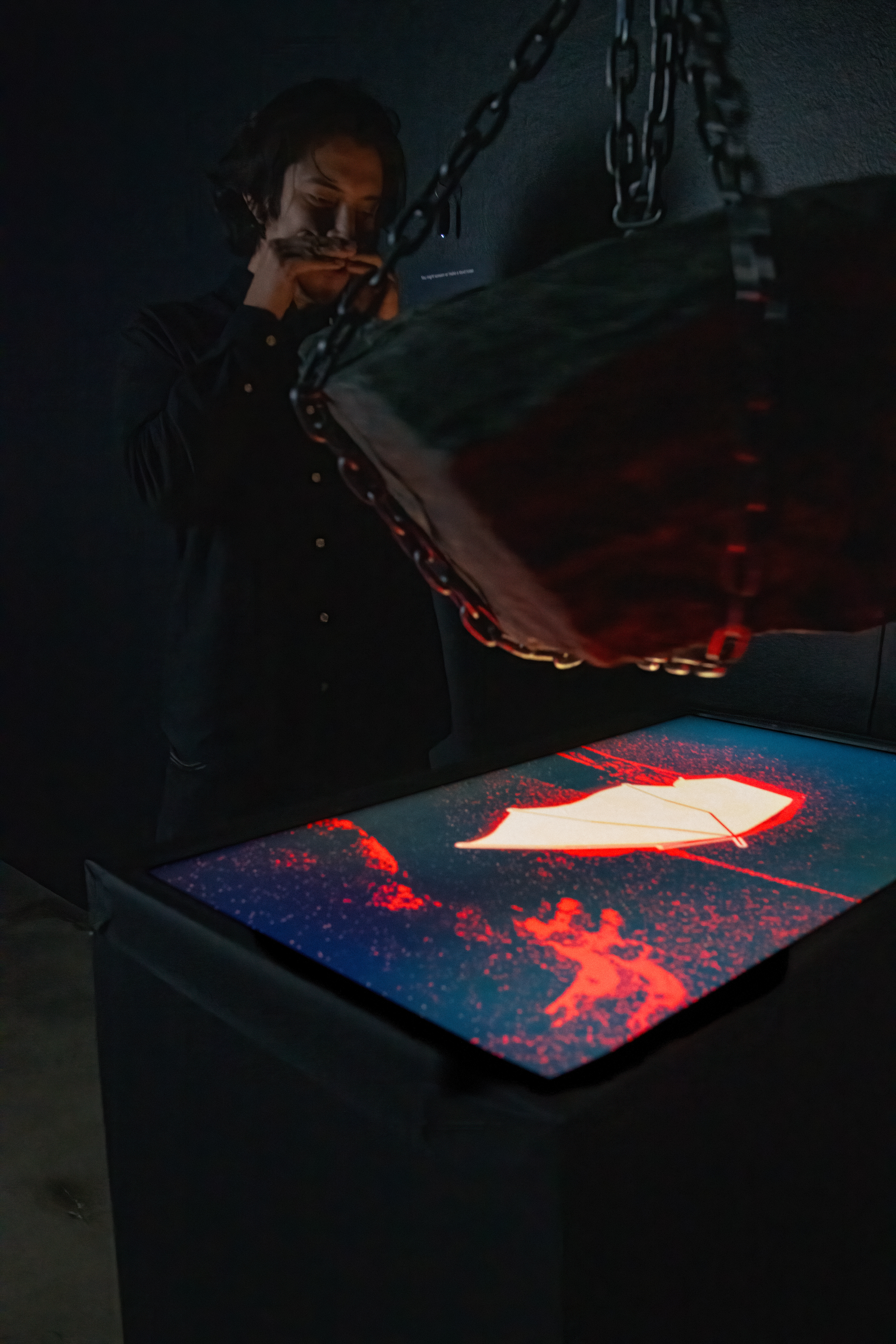
Installation of 4 rocks, LCD screens, custom software, computers, and webcam.
Installation of 4 rocks, LCD screens, custom software, computers, and webcam.
Sourced from the Bay Area’s oceanic mantle, these serpentinite rocks exist as physical manifestations of trapped light. Their green, scaled surface carries the name and texture of the serpent, serving as a vessel for un espíritu—the murciélago (bat), jaguar, serpiente (serpent), and cocodrilo (crocodile). In the Inframundo, these minerals function as vortices of energy that anchor animal spirits to the mineral form, honoring a Maya belief in animism.
The stones are suspended by chains while screens provide live reflections of electrons captured through webcam feeds. This installation recognizes that matter is never static; it is vibrating energy in motion. Through this constant feedback loop of sound and light, the heavy geology of the rocks returns to its original, luminous state. Material and digital reflections coincide in the gallery to map the subtle currents that flow between geology, animal spirits, and human perception.
Sajkil[miedo]
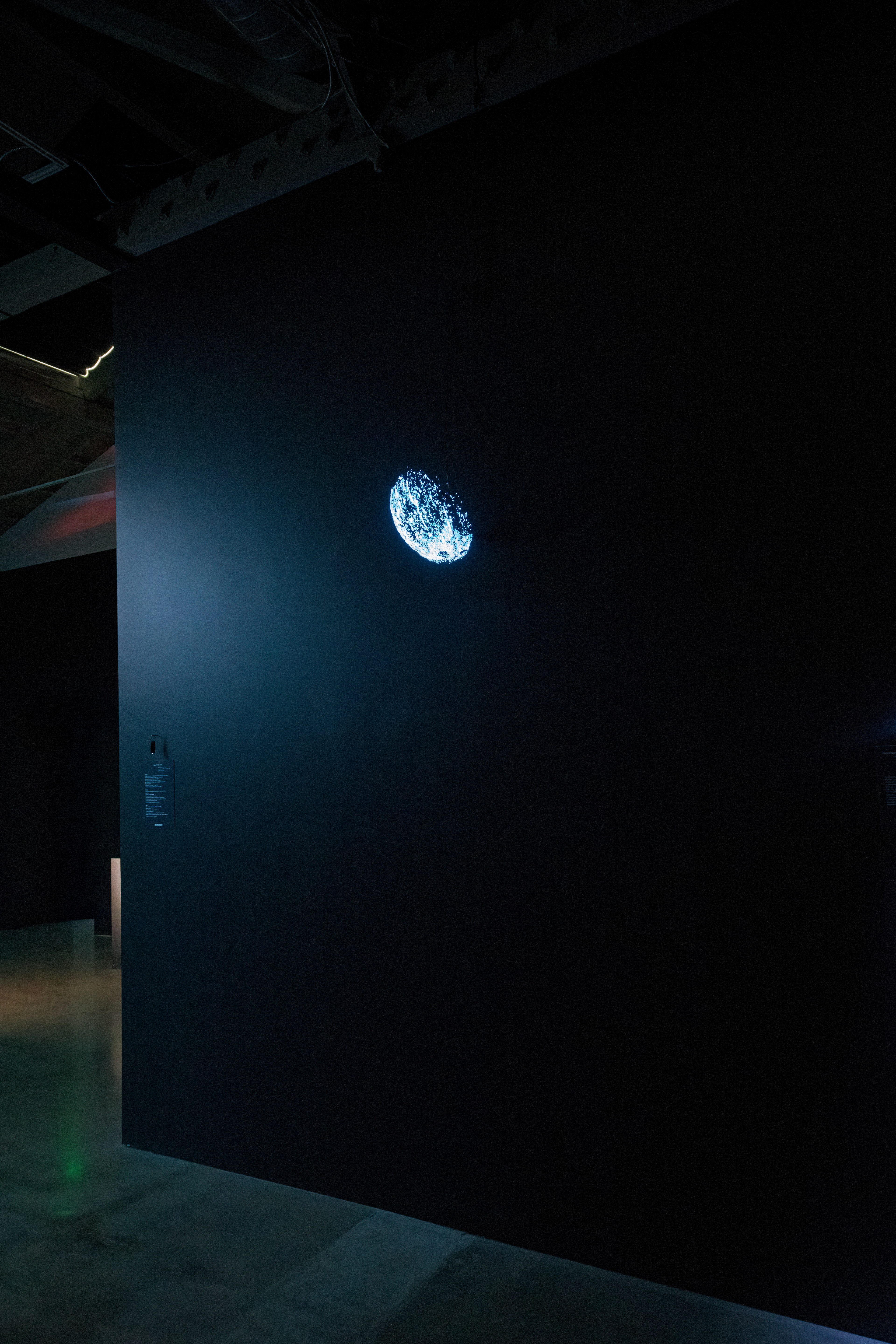
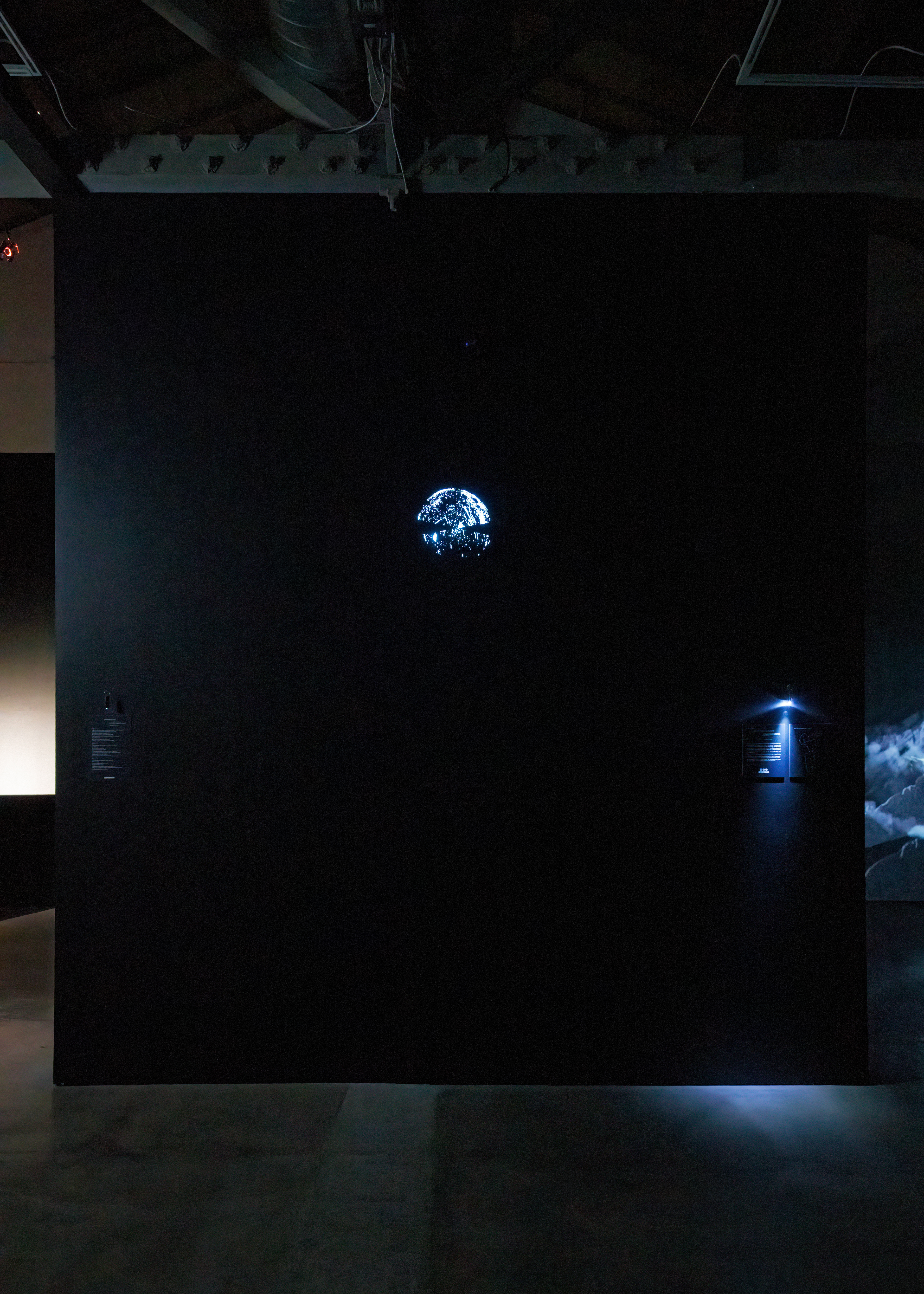
CGI Animation 2 Led Fans
Courtesy of the artist
Poem Courtesy of Briceida Cuevas Cob
Courtesy of the artist
Poem Courtesy of Briceida Cuevas Cob
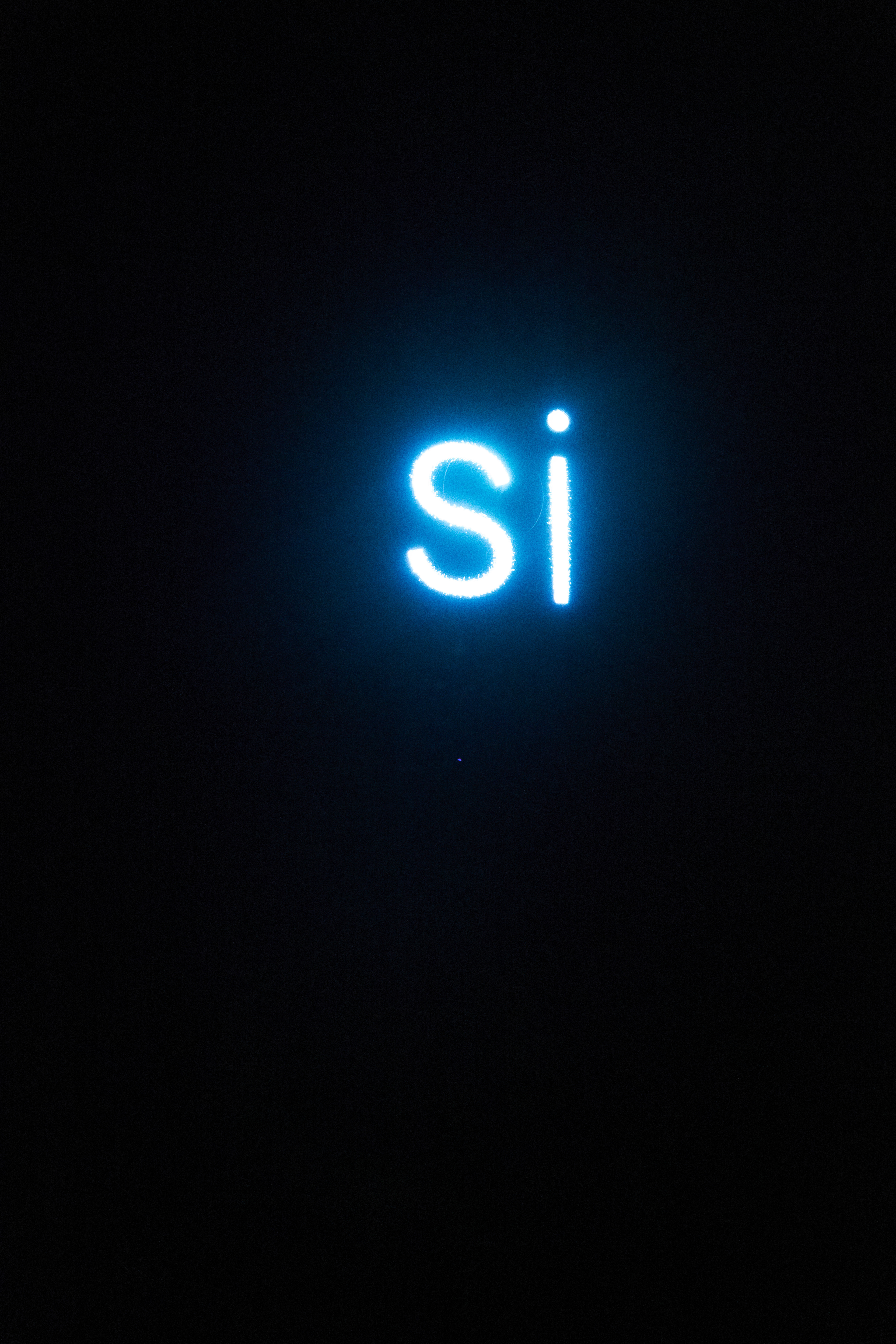
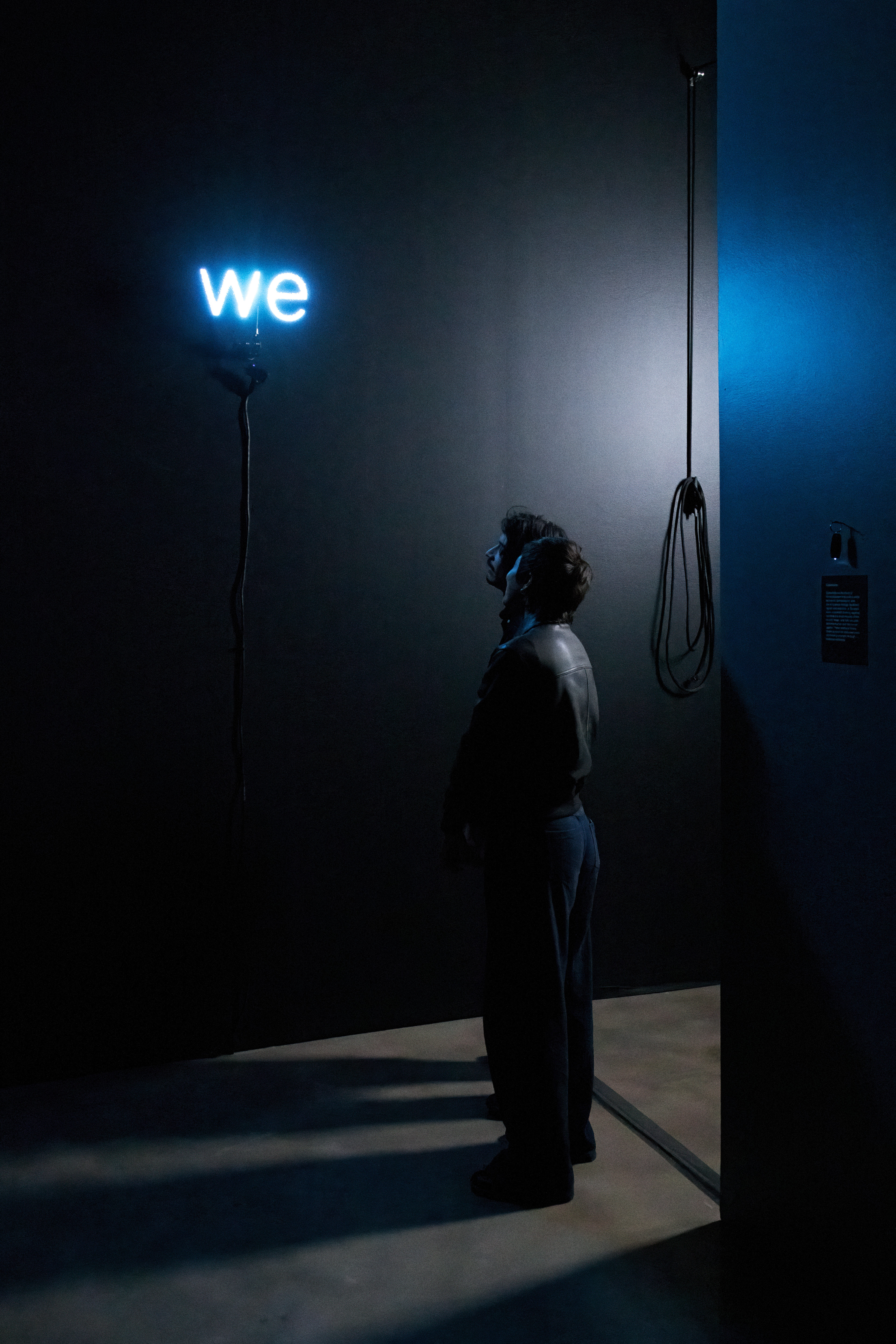
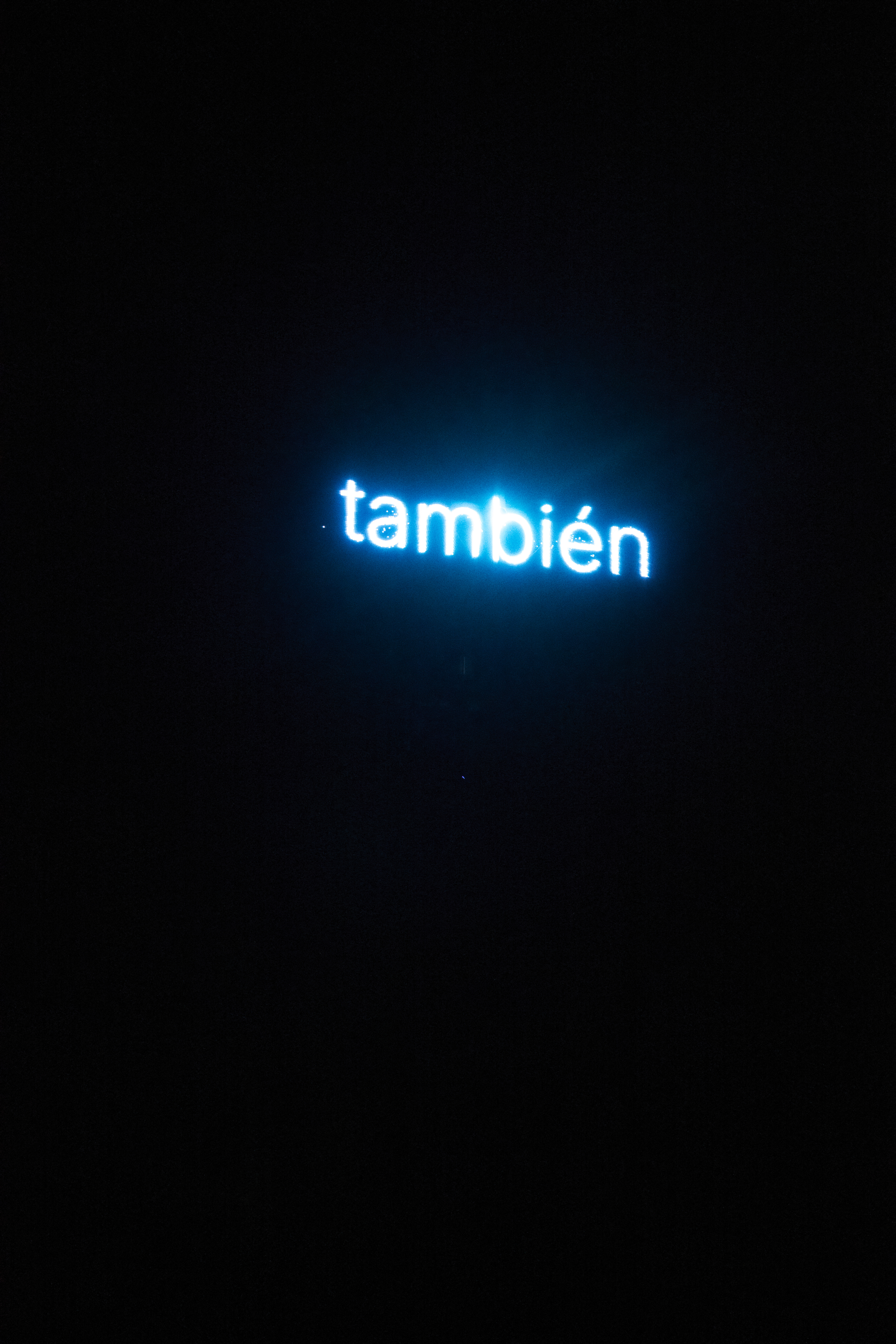
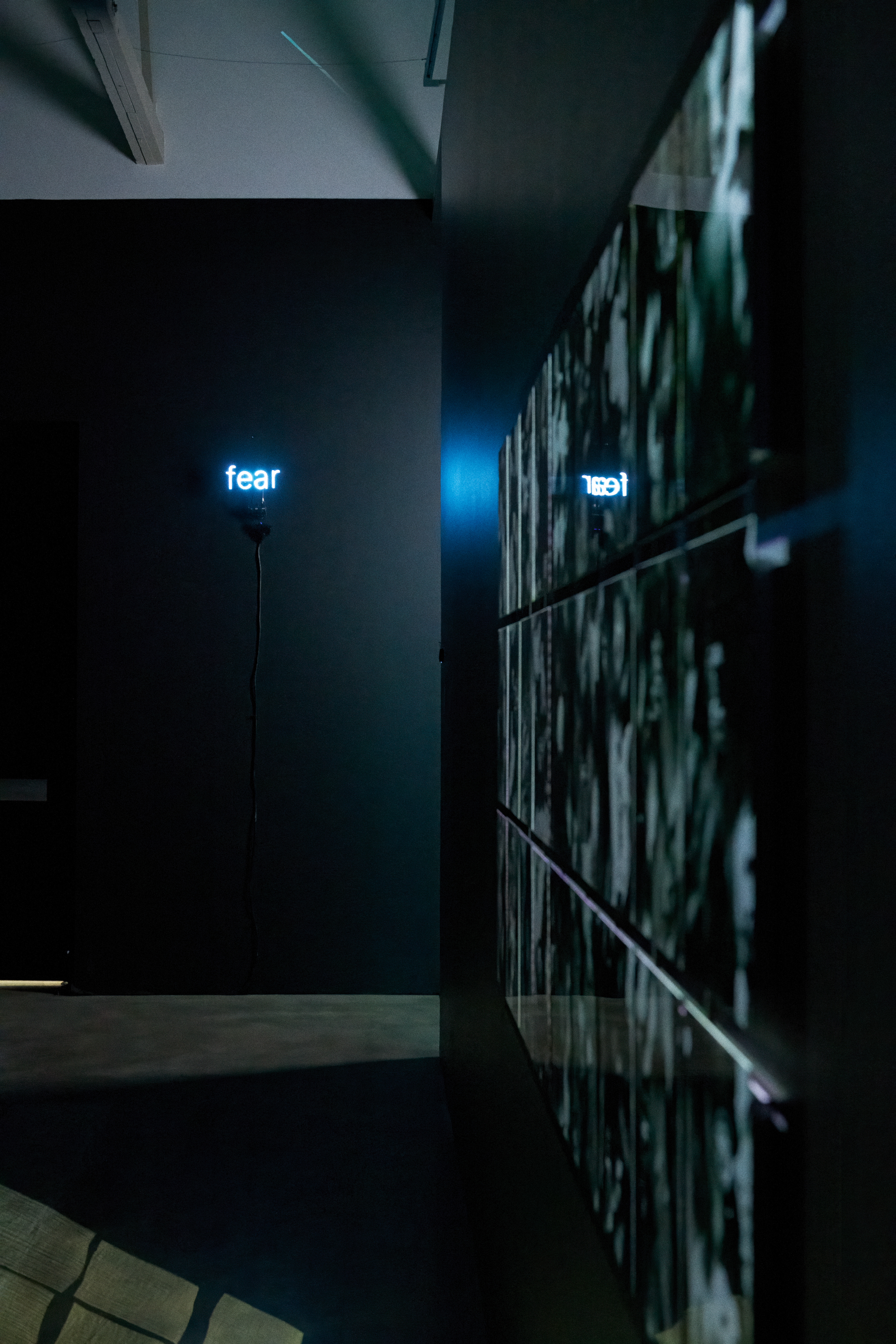
Major support: John Green and Martin Fox, Mercy and Roger Smullen Fund, Ronald Whittier Family Foundation. additional support: City of San José Office of Cultural Affairs, David and Lucile Packard Foundation, San Francisco Foundation, Applied Materials, Stanford University, San José State University.
Miguel Novelo, INFRAMUNDO, ICA San José, Spring 2026. Photo credit: Shaun Roberts.
press
“darkness becomes less a limit on vision than another way of organizing it.”
— Hantian Zhang, Roborant Review, may 2026 roborantreview.com
— Hantian Zhang, Roborant Review, may 2026 roborantreview.com
la educación

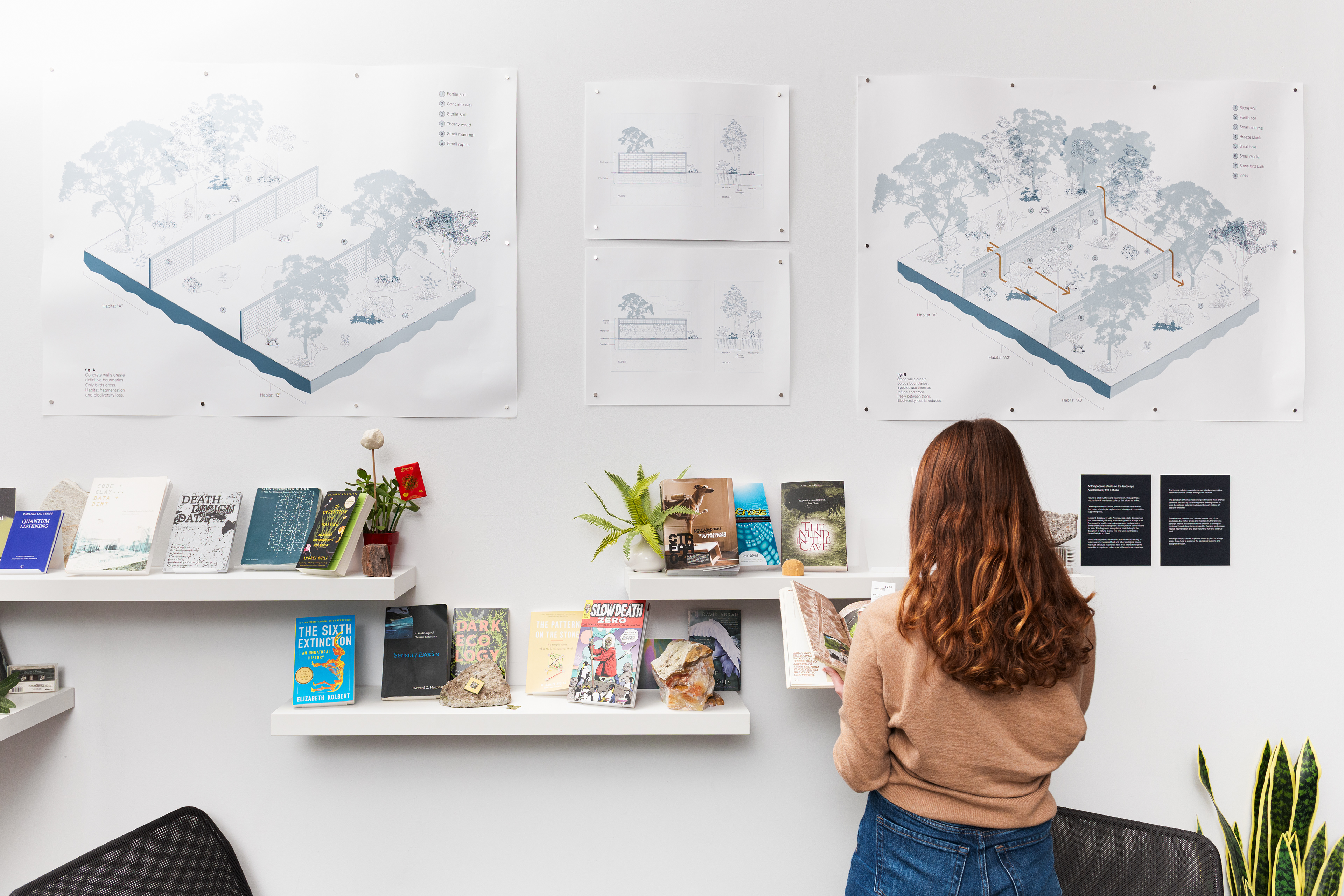
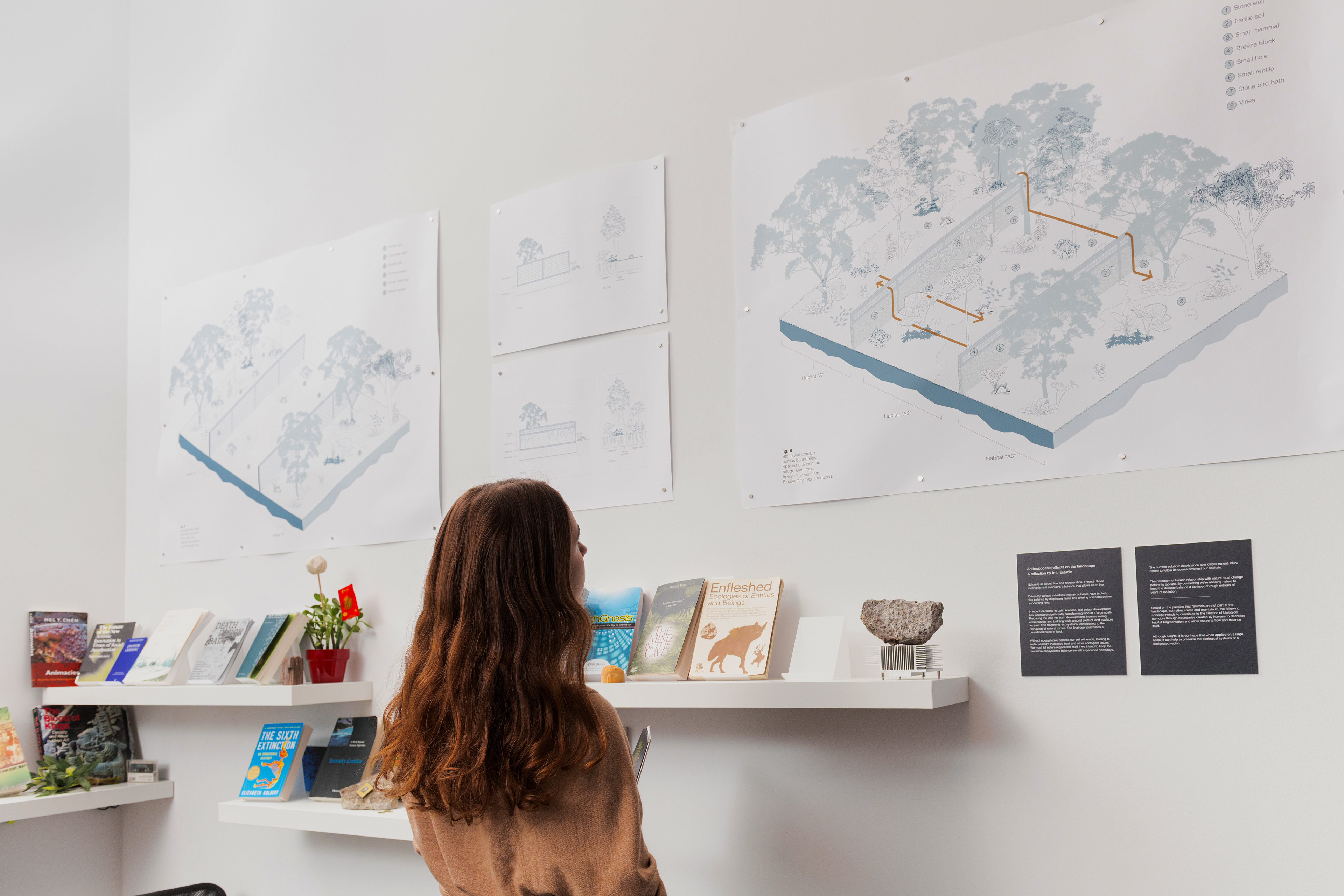
As part of INFRAMUNDO I collaborated with fmt. Estudio (@fmt.estudio) on a series of research conversations exploring the relationship between art, architecture, ecology, and balance.
Alongside Zaida Briceño, Orlando Franco, and curator Zoë Latzer, we discussed the dynamic forces of construction and destruction, and the interplay between life and death.
We explored how the exhibition could evoke themes of death and revival, heat and coldness, the tension between motion and stillness.
Envisioning hammocks to hold our bodies in a space that allows one to leave the physical self behind, and become submerged in the underworld.
For the exhibition, fmt. Estudio developed architectural drawings of a natural corridor similar ideas implemented at their home, and presented a manifesto in the first gallery.
“Nature depends on cycles of regeneration. Through those mechanisms, ecosystems maintain a delicate balance that sustains life. Driven by various industries, human activities have broken this balance by displacing fauna and altering soil composition supporting flora. In recent decades, in Latin America, real estate development has increased significantly, transforming land at a large scale.
Preparing the land for such developments involves destroying entire forests and building walls around plots of land available for sale. This fragments ecosystems, contributing to the disruption of natural cycles. The final buyer purchases a desertified piece of land. Without ecosystemic balance our soil will erode, leading to water scarcity, increased heat and other ecological issues."
How can we design with other species in mind? To create spaces that accommodate migration, growth, decay and renewal rather than control over them?
Alongside Zaida Briceño, Orlando Franco, and curator Zoë Latzer, we discussed the dynamic forces of construction and destruction, and the interplay between life and death.
We explored how the exhibition could evoke themes of death and revival, heat and coldness, the tension between motion and stillness.
Envisioning hammocks to hold our bodies in a space that allows one to leave the physical self behind, and become submerged in the underworld.
For the exhibition, fmt. Estudio developed architectural drawings of a natural corridor similar ideas implemented at their home, and presented a manifesto in the first gallery.
“Nature depends on cycles of regeneration. Through those mechanisms, ecosystems maintain a delicate balance that sustains life. Driven by various industries, human activities have broken this balance by displacing fauna and altering soil composition supporting flora. In recent decades, in Latin America, real estate development has increased significantly, transforming land at a large scale.
Preparing the land for such developments involves destroying entire forests and building walls around plots of land available for sale. This fragments ecosystems, contributing to the disruption of natural cycles. The final buyer purchases a desertified piece of land. Without ecosystemic balance our soil will erode, leading to water scarcity, increased heat and other ecological issues."
How can we design with other species in mind? To create spaces that accommodate migration, growth, decay and renewal rather than control over them?